
Here is something that rarely gets written in a maintenance log: “problem caused by wrong brush.” What gets written instead is conveyor jam, surface damage, heat buildup at station 4, excessive sparking near weld bay. The brush is the last thing anyone looks at.
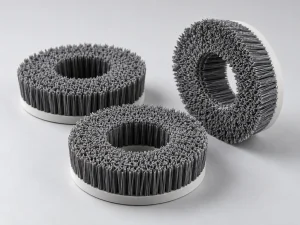
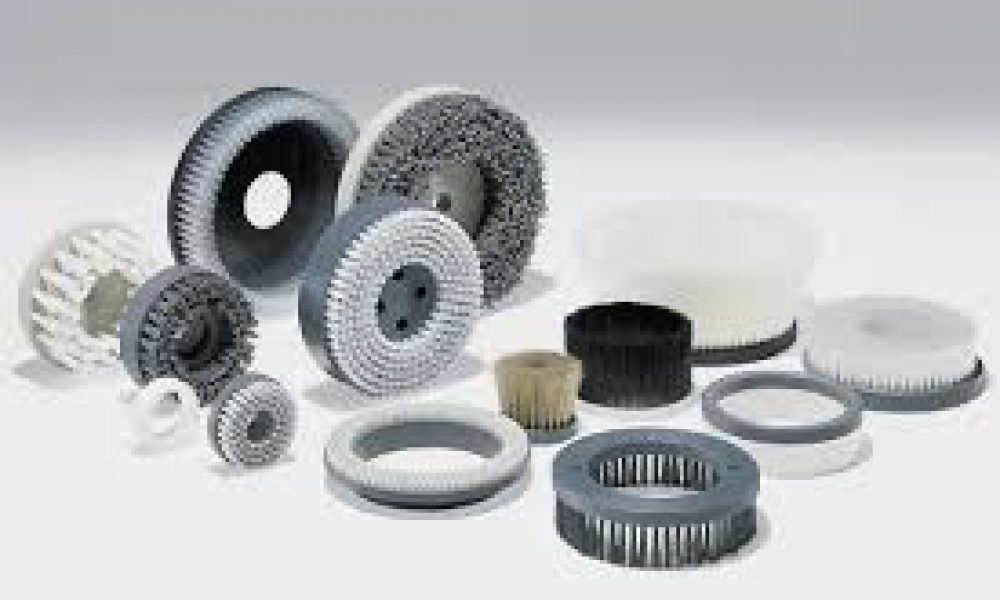
But if your plant runs metal brushing operations and you are seeing sparks or heat that was not there three months ago, there is a fair chance the Disc brushes running on your machines are the actual source of the problem, not the symptom.
This piece is for maintenance heads and floor supervisors who want a straight answer on wire brush selection, not a catalogue description.
Sparks and heat are not the same problem
People often treat them as the same issue. They are not, and mixing them up leads to the wrong fix.
Sparks during brushing almost always come from a material mismatch. Carbon steel wire on aluminium. A steel brush running on a copper component. Sometimes it is a speed issue, where the brush is running faster than it was designed for and the friction at the wire tips is generating heat intense enough to throw particles. But if your brush has not changed and your speed has not changed and the sparks are new, the first question is whether the material you are brushing has changed.
Overheating is usually slower and more internal. The brush housing gets warm. The mounting area gets warm. Often this is a brush that has been running past its replacement point, where the filaments are shortened and the backing is doing more of the contact work. It can also be a density issue: a brush with too many filaments for the application creates friction that has nowhere to go.
Slowing the machine down helps in the moment. It does not fix either problem.
Why this matters more in Indian workshops than the manuals suggest
Most safety guidance on wire brushes is written for environments with proper guarding, spark containment, and dedicated ventilation. A lot of Indian metalworking shops are not running those setups, especially smaller fabrication units and job shops.
That is not a criticism. It is just the reality that makes brush selection more consequential here than in a fully controlled environment.
In a bay where grinding, deburring, and cutting fluid use are happening in the same space, a brush throwing sparks is not a minor inconvenience. Near a solvent container, near a paint line, near any kind of fuel storage, it is a genuine ignition risk. The incidents that result rarely make it into official records. They get handled on the floor, noted informally, and forgotten. Until the next one.
The cases that go badly wrong are almost never dramatic equipment failures. They are small mismatches that accumulated: wrong brush material, run too fast, in the wrong environment, for too long past its service life.
Wire material: what actually changes safety behaviour
Carbon steel
This is what most workshops in India default to because it is cheap and widely available. For the right application, metal brushes with carbon steel wire work well: heavy rust removal, scale cleaning, surface prep on mild steel and iron. Aggressive, holds up under hard use.
The problems start when it crosses into non-ferrous territory. Running carbon steel wire on aluminium, copper, or brass creates two issues. First, you get sparks. Second, you get steel particle contamination embedded in the softer surface, which causes rust spots later. Neither of these is obvious immediately. The contamination issue especially tends to show up weeks after the job is done.
Carbon steel also corrodes fast in wet or humid conditions. The wire weakens at the base before you can see it externally, and that is when breakage becomes a real concern.
Stainless steel
Use stainless wire when the workpiece is stainless steel. This is less obvious than it sounds: many shops use carbon steel on stainless because it is cheaper, and the result is contamination that shows up as rust bloom on a surface that was supposed to be rust-resistant.
Stainless wire runs at slightly lower friction temperatures than carbon steel at the same speed, which does help in applications where heat is already a concern. It costs more. For stainless fabrication, food equipment, pharmaceutical machinery, or anywhere that surface integrity and hygiene matter, the cost difference is not negotiable.
Brass wire
Brass is what you reach for when sparks cannot happen. Not “should be minimised.” Cannot happen.
Paint spray booths, chemical processing lines, any area near cutting oils or solvents, fuel storage proximity, gas lines. In these environments, metal brushes made with brass wire are the right call regardless of what you are brushing. Brass is soft enough that it does not generate ferrous sparks, and the heat it produces at the brush face is meaningfully lower than steel.
It wears faster. For applications that run continuously, you will replace brass brushes more often than steel. That is an acceptable trade when the alternative is an ignition event in a solvent-heavy environment.
One thing to note: brass wire is also the right choice for surface work on copper, aluminium, and brass components where steel contamination would damage the finish or cause galvanic corrosion later.
Crimped versus knotted wire: why it matters for risk
This does not come up often in buying conversations but it should.
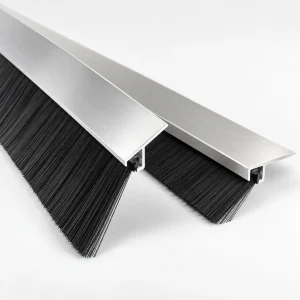
Crimped wire has a slight wave or kink along the filament. This makes the brush more flexible, distributes pressure more evenly across the contact surface, and reduces the chance of individual wire tips digging in. For most strip brush applications at moderate speed, crimped wire does a cleaner job with less risk of shedding.
Knotted wire is more aggressive. The filaments are twisted into tight bundles and anchored at the base, which makes the brush resistant to splaying even under heavy load. It cuts faster and lasts longer under high-pressure conditions. But when a knotted bundle breaks at speed, the whole bundle leaves the brush as a unit, not a single wire. In Indian workshop environments where angle grinder guards are sometimes missing or modified, knotted wire at high RPM is a meaningful safety risk.
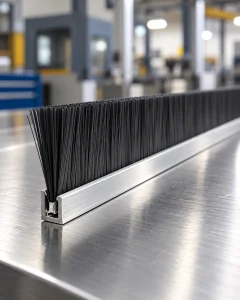
For most strip brush applications used in sealing, edge cleaning, or light surface work on production lines, crimped wire gets the job done without the same breakage risk.
The RPM number that almost nobody checks
Every wire brush has a maximum operating speed. It is printed on the packaging, sometimes stamped on the brush itself. Most buyers never look at it.
Here is why it matters. The no-load RPM of an angle grinder is higher than its rated RPM. The rated speed is what the tool runs at under resistance. When you first pull the trigger with no load, the tool spins faster. If your brush’s maximum rated speed is 6,500 RPM and your angle grinder’s no-load speed is 8,500 RPM, the brush is overspeed every time you start the tool before contact.
At overspeed, the wire fatigues at the crimp or staple point faster than normal. When it lets go, it does not fall. It leaves the brush at whatever speed the tool was running and travels in whatever direction the rotation was pointing.
Most “spark incidents” that get blamed on the material are actually this: wrong speed, wrong brush, on an unguarded tool.
Before the next brush gets mounted:
- Find the max RPM on the brush packaging
- Check the no-load RPM of the tool, not the rated RPM
- The brush number needs to be higher than the tool number
- If it is not, that brush does not go on that tool
Three environment-specific situations worth knowing
Wet conditions: Carbon steel wire weakens at the base in sustained moisture exposure. The corrosion is internal and not visible until the wire starts breaking. If your operation runs wet, stainless steel wire is the correct choice for ferrous work. Not better. Correct.
Near heat sources: Welding bays, casting areas, anything with ambient heat above normal workshop temperatures will accelerate fatigue in the wire anchor points. In these areas, brush inspection intervals should be shorter than standard. Heat migration is slow but it is cumulative.
Flammable environments: Brass wire only. This is not a sliding scale where you weigh cost against risk. If there are cutting oils, solvents, paints, or gas lines within the working area, metal strip brushes with any type of steel wire are the wrong choice, full stop.
Before the next order: five questions worth answering first
- What is the base material being brushed?
- Is the environment around the operation flammable or near solvents?
- What is the no-load RPM of the tool the brush will run on?
- Will the operation involve moisture or wet conditions?
- How often is the current brush being replaced, and why?
If the answers to these questions are not clear, that is the right moment to call the manufacturer before placing the order, not after a problem shows up on the floor.
About Ganesh Brush Manufacturers
Ganesh Brush Manufacturers is a Pune-based industrial brush company with over three decades of manufacturing experience. They produce industrial brushes across a range of types and materials, including metal wire strip brushes in standard and custom configurations, for buyers across India.
Frequently Asked Questions
1. Why do industrial brushes cause sparks or overheating during use?
Sparks usually result from material mismatch, while overheating is caused by excessive friction or worn-out brushes. Both indicate incorrect brush selection or usage.
2. Which wire material is best for spark-sensitive environments?
Brass wire is the safest option as it minimizes sparks and heat generation. It is ideal for use near flammable materials or chemical environments.
3. What is the difference between crimped and knotted wire brushes?
Crimped wire offers flexibility and safer operation for lighter tasks, while knotted wire is more aggressive but carries higher safety risks at high speeds.
4. Why is RPM compatibility important in industrial brush usage?
Using a brush beyond its rated RPM can lead to wire breakage and safety hazards. Always match the brush rating with the machine’s no-load speed.
5. How do environmental conditions affect brush selection?
Factors like moisture, heat, and flammable surroundings impact material choice and safety. Selecting the right brush reduces risks and improves performance.