
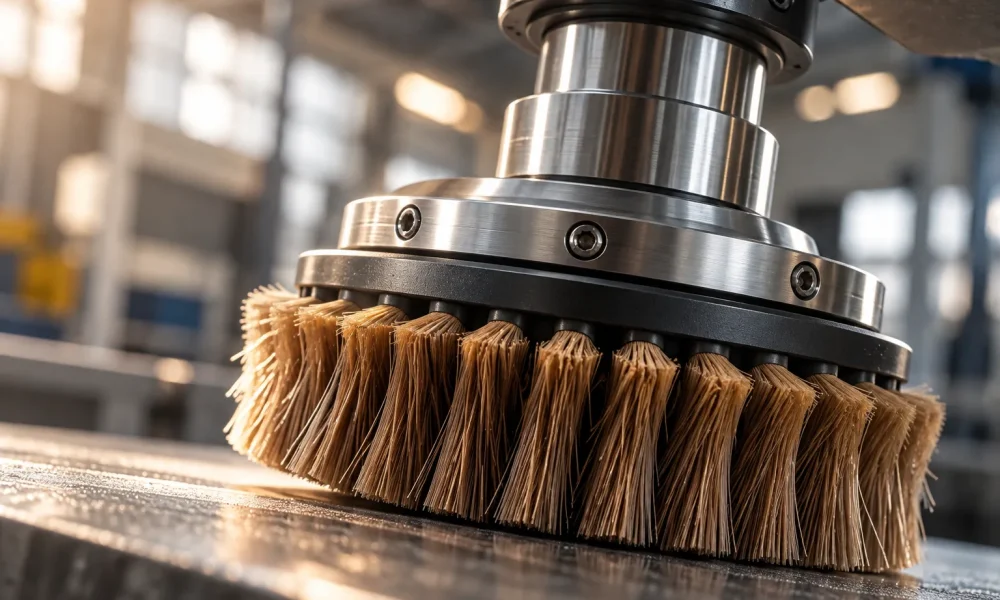
A request for a custom industrial brush often starts with a drawing, a sample, machine dimensions or simply an application requirement that needs a practical solution. What arrives as an enquiry must eventually become a brush with the right form, dimensions, filament and working characteristics. That transition involves several decisions before manufacturing can begin.
For businesses evaluating Industrial Brush Manufacturers in India, understanding this journey can reveal far more about a manufacturer’s capabilities than simply browsing a product catalogue. The focus is on connecting the brush specification with the conditions in which it is expected to work.
Stage 1: It Starts With the Application, Not the Brush
A customer may know that a cylinder, strip, disc or abrasive brush is required. In other cases, the starting point may simply be a process requirement such as cleaning, deburring, sealing, sweeping or surface finishing.
Either way, the application provides the context for subsequent decisions.
Important information can include:
- What does the brush need to accomplish?
- Where will it be installed or used?
- What material or surface will it contact?
- How much space is available within the machine?
- Is a particular brush form already specified?
- Will it encounter moisture, dust, heat, chemicals or abrasive material?
- Is the brush intended for continuous or intermittent operation?
A brush that physically fits into a machine is not necessarily suitable for the job. Its working characteristics also have to correspond with the process.
This is why application understanding comes before deciding the final specification.
Stage 2: Turning Requirements Into Brush Specifications
Once the operating requirement is understood, the information can be translated into practical design considerations.
A seemingly straightforward detail can influence several parts of the brush. Machine dimensions, for example, may determine the available brush diameter or length, while the surface being contacted can influence filament selection.
| Requirement | Design Consideration |
| Available machine space | Brush dimensions and overall configuration |
| Surface being contacted | Suitable filament type and contact characteristics |
| Cleaning or processing task | Brush form and filament arrangement |
| Required coverage | Brush length, width or diameter |
| Operating movement | Suitable brush construction for the application |
| Exposure to moisture or contaminants | Appropriate material selection |
| Existing machine arrangement | Mounting and dimensional compatibility |
Customisation therefore involves more than altering one measurement on an existing brush. Dimensions, construction and material selection need to work together as part of the same specification.
Where customers already have technical drawings or existing samples, these can also provide useful reference information when discussing the required brush.
Stage 3: Selecting the Brush and Filament Configuration
The filament is the part of the brush that interacts directly with the workpiece, conveyor, component or other surface. Its selection can significantly influence how the brush behaves in service.
We work with a range of filament materials, including:
- Nylon
- Polypropylene
- Abrasive filament
- Coco
- Palmyra fibre
- Mexican fibre
- Hair
- Mild steel
- Stainless steel
- Brass
There is no universally appropriate material across industrial applications.
Synthetic filaments may suit particular cleaning, conveying or sealing requirements, while abrasive filaments are relevant where controlled surface action is required. Metallic options can be considered for applications requiring different brushing characteristics, while natural fibres have their own industrial uses.
Material selection should therefore follow the application rather than the other way around.
The configuration matters as well. Filament density, exposed length, brush dimensions and the way the brush contacts a surface can influence its behaviour. These considerations need to be viewed together instead of treating filament material as an isolated specification.
Stage 4: Moving Into Manufacturing
Once the design requirements have been established, the project moves from specification into physical production.
This is where drawings, dimensions, material decisions and brush configuration begin to take tangible form on the manufacturing floor. The objective is straightforward: translate the agreed requirements into a finished brush while maintaining the intended geometry and construction.
Picture the process as a progression rather than a single manufacturing action.
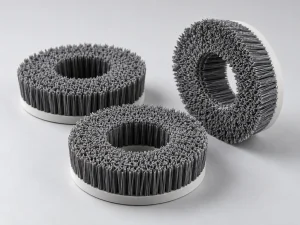
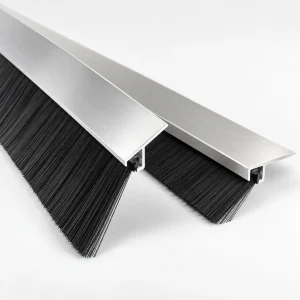
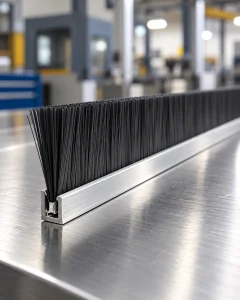
The required brush body or supporting construction has to correspond with the specified dimensions. The selected filament must then form the working portion of the brush according to the required configuration. Depending on the application, the result could be a strip brush, cylindrical brush, disc brush, abrasive brush or another customised form.
For buyers comparing Industrial Brush Manufacturers in India, this manufacturing capability deserves attention. A broad catalogue is useful, but custom industrial requirements also demand the ability to move from application information and specifications to a brush that can be integrated into the intended equipment or process.
Importantly, the exact manufacturing route can differ according to brush type, construction and material. Custom brush production should therefore be considered an application-led manufacturing exercise rather than one fixed production sequence.
Stage 5: Checking the Brush Against the Requirement
A finished brush should ultimately be considered against the specification that initiated the project.
Depending on the application, relevant considerations may include:
Dimensions: Does the finished configuration correspond with the dimensional requirements of the machine or installation?
Brush form: Is the geometry appropriate for the intended operating position?
Filament: Does the selected material correspond with the surface and application requirements identified earlier?
Working coverage: Will the brush reach the intended contact area?
Interface: Is the specified configuration compatible with the equipment in which the brush will operate?
These are important questions because an industrial brush is usually part of a larger process. A dimensional mismatch or unsuitable working configuration can affect integration even when the brush itself appears correctly manufactured.
The original specification consequently remains the reference point.
Stage 6: The Finished Brush Has to Fit the Application
Custom manufacturing is sometimes interpreted simply as producing a non-standard length, width or diameter. In industrial brushing, that definition is too narrow.
Consider two brushes with identical external dimensions. One may be intended to remove fine residue from moving equipment, while another may provide sealing around an opening. Their dimensions could be similar, yet their working requirements are fundamentally different.
A custom industrial brush therefore needs to be considered in terms of what it will do, what it will contact and where it will operate.
That brings the manufacturing journey back to the original enquiry.
The drawing, sample or application details supplied at the beginning are not merely information required to obtain a quotation. They establish the parameters around which the brush specification can be developed.
What Buyers Should Look for in an Industrial Brush Manufacturer
Manufacturer evaluation should extend beyond finding a company that lists the required brush category.
When assessing potential suppliers, buyers can consider:
- Product range: Can the manufacturer support different industrial brush forms?
- Customisation capability: Can dimensions and configurations be developed around specific requirements?
- Material options: Is there a suitable selection of synthetic, natural, abrasive and metallic filament options?
- Application understanding: Can the discussion begin with what the brush needs to accomplish rather than only a catalogue reference?
- Manufacturing experience: Does the company have established experience producing industrial brushes for different sectors and applications?
These factors become particularly important when a standard off-the-shelf brush cannot adequately address the machine or process requirement.
From Your Requirement to Our Manufacturing Floor
At Ganesh Brush, we manufacture a broad range of industrial brushes while also supporting customised requirements. Our range includes strip, cylinder, flexible, abrasive and disc brushes, along with brush pads, sweeping brushes and specialised brush solutions for industrial applications.
When customers approach us with dimensions, drawings, samples or specific application requirements, the conversation can begin with the job the brush is expected to perform. As one of the established Industrial Brush Manufacturers in India, our focus is on connecting those requirements with appropriate brush configurations and material options from our manufacturing range.
A finished custom brush may be the visible result, but the more important work starts much earlier: understanding what is required and translating that information into a practical manufacturing specification.
Frequently Asked Questions
1. What information should I provide when enquiring about a custom industrial brush?
Useful information can include the application, required dimensions, surface being contacted, brush form, operating conditions and any available technical drawing or sample. The more relevant application information available, the easier it is to discuss an appropriate specification.
2. Can an industrial brush be manufactured according to a drawing or sample?
Drawings, dimensions and existing samples can provide valuable references when discussing a customised brush requirement. The application itself should also be considered so that the specification reflects how the brush is expected to work.
3. What types of industrial brushes does Ganesh Brush manufacture?
Ganesh Brush’s range includes strip brushes, cylinder brushes, flexible brushes, abrasive brushes, disc brushes, brush pads, sweeping brushes and specialised/customised brushes for different industrial applications.
4. What filament materials are available for custom brushes?
Material options include nylon, polypropylene, abrasive filament, coco, Palmyra fibre, Mexican fibre, hair, mild steel, stainless steel and brass. Selection depends on the intended application and operating requirements.
5. Why does application information matter when ordering a custom brush?
Two brushes with similar dimensions can perform completely different jobs. Information about the surface, process, operating conditions and expected brush action helps establish a specification appropriate for the intended application.
6. Does custom brush manufacturing only mean changing the dimensions?
No. Dimensions are only one consideration. Customisation can also involve the brush form, filament material, configuration and other application-related requirements. The aim is to develop a brush specification that corresponds with the equipment and task rather than simply producing an unusual size.