
Picking a strip brush supplier in India should not be this complicated. And yet, most procurement teams either go with the cheapest quote or the most familiar name, and then spend the next six months dealing with brush failures, sealing gaps, and replacement cycles that were never budgeted for. The criteria below will not make the decision for you. But they will stop you from making a bad one.
Why The Supplier Matters More Than The Brush
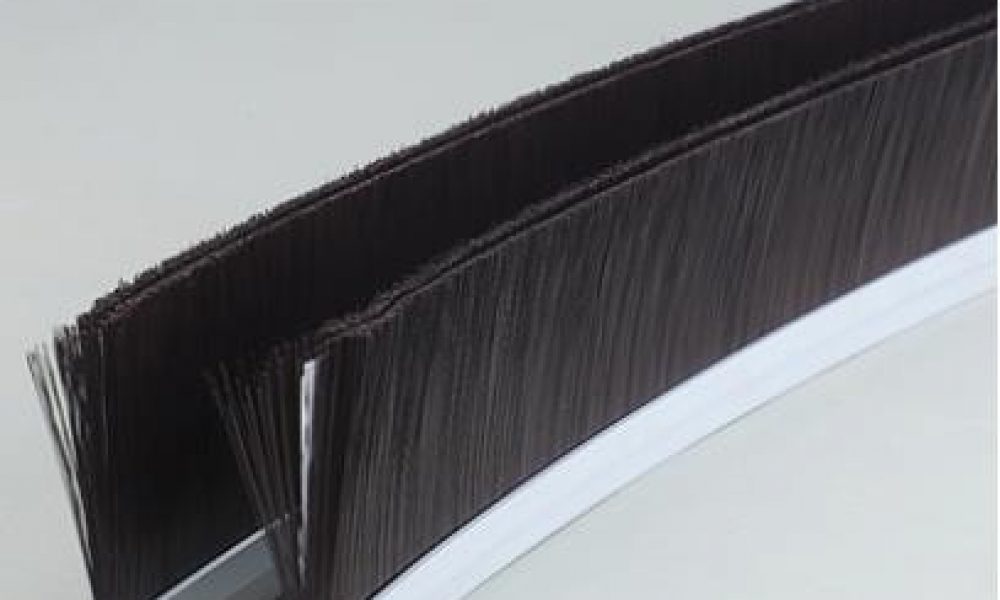
Strip brushes are deceptively simple products. A backing channel, bristle fill, some kind of mounting mechanism. Nothing about them looks like it could go wrong. That simplicity is exactly why poor-quality strip brushes survive in the market, they look right until you install them.
A badly specified strip brush on a door seal lets dust in. On a conveyor, it lets contamination through. On a machine enclosure, it creates gaps that defeat the whole purpose of the seal. The brush is small. The consequences are not.
So before you compare prices, compare suppliers. Here is what to actually look at.
1. Do They Ask About Your Application Before Quoting?
This is the first filter. A supplier who sends a price list in response to your enquiry, without asking about your substrate, operating environment, temperature range, or sealing requirement, is selling you a catalogue product, not a solution.
A genuine strip brush supplier will ask what the brush is sealing against, what it is mounted on, whether the environment is wet or dry, and what the contact pressure looks like. If they do not ask, walk away.
2. Bristle Material Options, And Actual Knowledge Of Them
Nylon, polypropylene, stainless steel, brass, horse hair, and different filaments perform differently across applications. The supplier should be able to tell you, specifically, why one filament is better than another for your conditions. Not generically. For your conditions.
Watch for suppliers who default to nylon for everything. Nylon is versatile, yes. But it is not the right call for high-temperature applications, for environments with chemical exposure, or for applications requiring conductive or anti-static properties.
3. Channel Material And Gauge
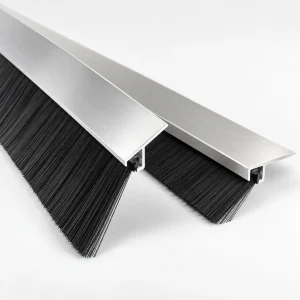
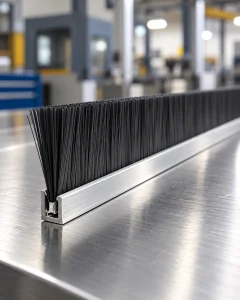
The backing channel is what holds the bristles in place and what mounts to your surface. Aluminium, galvanised steel, stainless steel, each has its place.
Ask the supplier:
- What gauge channel do you use for this application?
- Is the channel extruded or roll-formed?
- What is the holding method, stapled, epoxy-bonded, or crimped?
If they cannot answer these questions or have to check with someone, that tells you something about how much they actually manufacture versus how much they resell.
4. Customisation Capability, And Turnaround Reality
Most industrial applications need some degree of custom specification: a specific brush height, a particular channel width, a non-standard filament density. The ability to customize is table stakes for any serious strip brush supplier.
The real question is turnaround. Custom brushes on a six-week lead time are not useful for most Indian manufacturing operations. Ask:
- What is your standard lead time for a custom specification?
- Do you manufacture in-house or outsource production?
- Can you handle repeat orders with consistent specification?
Consistency matters as much as customisation. If your second order does not match the first, you have a quality control problem, not just a supply problem.
5. Quality Certification, What It Actually Covers
ISO certification and TUV accreditation are worth something. They are not worth everything. Understand what the certification covers, the manufacturing process, the quality management system, or the product itself.
A certified process run on wrong materials still produces a wrong product. Ask to see test reports for bristle retention, filament durability under load, and channel deformation under temperature where relevant. Reputable suppliers have this data. They are not reluctant to share it.
6. Minimum Order Quantity Versus Your Actual Volume
This is a commercial reality that many procurement teams hit late. Some manufacturers in India have MOQs that do not make sense for maintenance or replacement orders. If you need 15 metres of a specific strip brush configuration for a single machine line, a supplier requiring 200-metre minimums is not the right fit, regardless of price.
Get MOQ clarity early. It saves the back-and-forth later.
7. Post-Supply Technical Support
Once a strip brush is installed, questions come up. Contact pressure needs adjusting. The mounting channel needs modification for a surface that turned out to be non-standard. The operating conditions changed.
A strip brush supplier who disappears after the invoice is raised is not a supplier. They are a transaction. Ask whether they provide installation guidance, whether their team is reachable after delivery, and whether they have handled similar applications before.
References from existing customers in similar industries are worth asking for here. Not to audit the supplier, just to understand how they actually work.
Conclusion
After running through these seven criteria, most supplier lists in India shrink considerably. That is the point. You are not looking for the most options. You are looking for the right one.
Ganesh Brush Manufacturers has been manufacturing strip brushes and industrial brush solutions since 2008, with a focus on custom specifications, in-house production, and ISO-compliant quality standards. If you are evaluating suppliers for your next requirement, we are happy to answer any of the questions above, directly, and with specifics.
FAQs
1. What should I look for when choosing a strip brush supplier in India?
Look for a supplier that understands your application, offers suitable bristle and channel materials, provides customisation options, maintains quality standards, and offers technical support after delivery. The right supplier should recommend solutions based on your specific requirements rather than selling generic products.
2. Why is bristle material important in strip brush selection?
Different bristle materials perform differently depending on temperature, moisture, chemical exposure, abrasion levels, and conductivity requirements. Selecting the correct filament material helps improve brush performance, durability, and overall operational efficiency.
3. Can strip brushes be customised for specific industrial applications?
Yes. Many industrial applications require custom strip brushes with specific filament types, brush heights, channel dimensions, and densities. A reliable supplier should be able to manufacture custom configurations while maintaining consistent quality across repeat orders.
4. How can I verify the quality of a strip brush supplier?
Ask about their manufacturing process, quality certifications, testing procedures, material specifications, and previous experience with similar applications. Reviewing product test data and customer references can also help assess supplier reliability.
5. Does post-sales support matter when buying industrial strip brushes?
Absolutely. Installation guidance, troubleshooting assistance, and ongoing technical support can help optimise brush performance and resolve issues quickly. Suppliers who provide support after delivery often help reduce downtime and improve long-term results.