
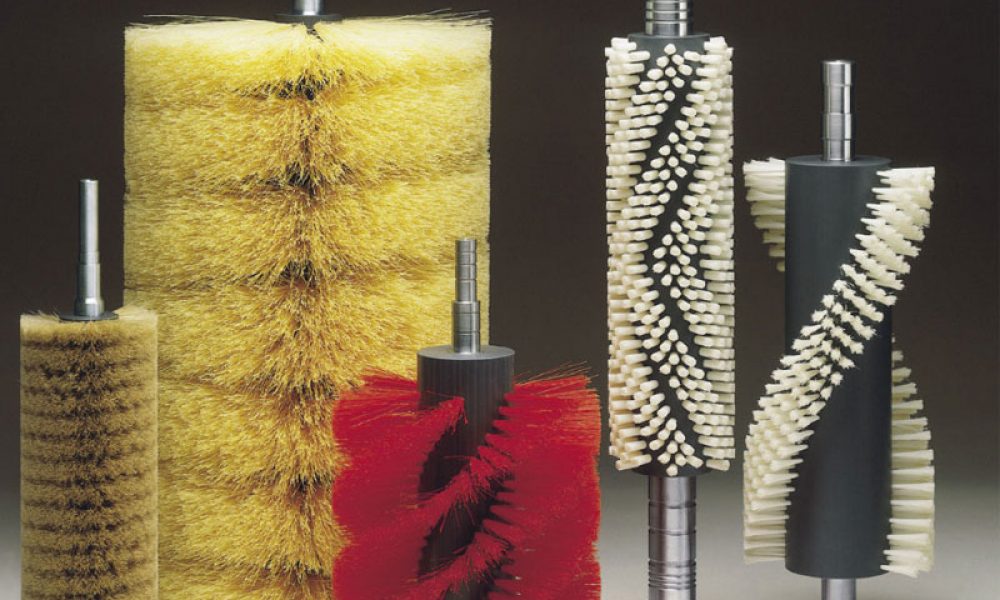
Most procurement decisions for an industrial cylindrical brush follow the same pattern. Someone from the maintenance or production team shares a specification with purchasing. Purchasing contacts three or four suppliers from IndiaMart or an old vendor database. Quotations arrive, comparisons begin, and in many cases, the lowest number wins.
Then the brush arrives, and the problems that follow usually have very little to do with price.
The buyers who avoid this cycle approach the process differently. Before the purchase order is released, they compare manufacturers, not just quotations. Because in industrial applications, the long-term cost of a brush is determined less by the initial unit price and more by consistency, technical understanding, and operational reliability.
Production Capability Is Not The Same As Production Range
Almost every industrial cylindrical brush manufacturer in India claims to serve industries such as food processing, steel, packaging, textiles, printing, and pharmaceuticals. The list is always extensive. What the list rarely shows is production depth.
There is a major difference between a manufacturer producing 200 brushes a month across ten industries and one producing 2,000 brushes a month for three specialised sectors. The second manufacturer develops process familiarity. They have likely seen applications similar to yours, encountered the same wear patterns, worked with comparable line speeds, and already understood what succeeds and what fails under those conditions.
That is why the better question is not:
“Do you manufacture industrial cylindrical brushes for my industry?”
The better question is:
“How many brushes are you currently supplying for applications similar to mine?”
If the manufacturer cannot answer with specifics, there is a good chance your order becomes part of their learning curve.
Sample Quality And Batch Quality Are Often Very Different
This is where procurement teams frequently misjudge supplier capability.
The sample unit is usually good. Any reasonably capable manufacturer can produce a few perfect industrial cylindrical brushes when they know those units are being evaluated closely. The real question is whether unit 450 in a 500-piece order will match the approved sample in performance and dimensional consistency.
Reliable manufacturers maintain:
- Consistent bristle fill density across the full batch
- Core runout within tolerance on every unit
- Uniform trim length after mounting and rotation
- Stable balancing during actual operating conditions
Unreliable manufacturers often maintain quality only during sample production or early-stage inspection.
One of the best ways to evaluate consistency is to ask for dimensional inspection reports from recent production batches shipped to actual customers, not from sample units prepared for evaluation. A manufacturer confident in their process control will usually share this information comfortably. Hesitation often indicates inconsistency somewhere in the production cycle.
Lead Time Accuracy Matters More Than Lead Time Speed
Four weeks is a commonly quoted lead time for custom industrial cylindrical brush orders in India. The more important question is whether four weeks actually means four weeks.
Delayed delivery creates operational problems far beyond procurement inconvenience. Production lines continue running with worn brushes longer than intended, cleaning efficiency drops, surface quality deteriorates, reject rates increase, and maintenance teams start improvising temporary workarounds that create additional process risks.
That is why buyers should evaluate delivery reliability, not just quoted speed.
Instead of asking only for estimated lead time, ask manufacturers for dispatch performance data over the last six months. Compare promised dispatch dates against actual shipment dates. The pattern usually reveals more than the sales pitch.
A manufacturer who consistently delivers in five weeks is operationally more valuable than one who promises three weeks and regularly ships in six.
Technical Support Before The Sale Reveals The Real Manufacturer
One of the clearest differences between a supplier and a true industrial cylindrical brush manufacturer appears during technical discussions before the order is placed.
A supplier usually accepts the specification, prepares a quotation, and moves directly toward the order.
A manufacturer questions the specification.
That may initially feel unnecessary, but it is often a sign of technical understanding. Experienced manufacturers know that many brush failures begin with incorrect assumptions in the original specification itself.
The best manufacturers will ask:
- What surface is the brush contacting?
- What is the operating speed?
- What material is being processed?
- What wear pattern are you currently seeing?
- What temperature, moisture, or chemical exposure exists in the environment?
Based on those answers, they may recommend a different bristle material, fill density, trim pattern, or core construction based on similar applications they have already supplied.
If every response from a supplier is simply:
“Yes, we can do that.”
Without any technical follow-up questions, you are probably dealing with an order-taker rather than an engineering-focused manufacturer.
And order-takers will manufacture exactly what you requested, even when the original specification is flawed.
After-Sales Support Is Where Most Comparisons Stop Too Early
Most buyers stop evaluating industrial cylindrical brush manufacturers once the product is delivered. That is usually where the larger cost picture gets missed.
Strong manufacturers continue tracking application performance after installation. They monitor brush life, wear behaviour, replacement intervals, and recurring failure patterns across customer applications.
Some will even inspect failed brushes onsite to determine whether the wear was expected, application-related, or prematurely caused by an operational mismatch.
Most suppliers will not invest that level of technical involvement.
The manufacturers who do are usually the ones worth building long-term relationships with because they are focused on improving process reliability, not just completing transactions.
Conclusion
Most industrial brush problems do not begin on the production floor. They begin much earlier during supplier evaluation, when purchasing decisions are reduced to dimensions and quotations alone. But cylindrical brushes operate inside high-speed, high-frequency industrial systems where consistency matters more than initial pricing. A brush that varies slightly in balancing, fill density, or trim accuracy can quietly affect cleaning efficiency, surface finish quality, maintenance intervals, and production stability over time.
That is why experienced industrial buyers eventually move beyond transactional sourcing and start evaluating manufacturers based on process understanding, technical involvement, and long-term reliability. At Ganesh Brush Manufacturers, industrial cylindrical brushes are developed with a strong focus on application behaviour, manufacturing consistency, and operational performance across demanding industrial environments.
FAQs
- What should buyers compare before choosing an industrial cylindrical brush manufacturer in India?
Buyers should compare production capability, batch consistency, lead time reliability, technical support, industry experience, and after-sales service before finalising a manufacturer.
- Why is the lowest quote not always the best option for cylindrical brushes?
The lowest quote can lead to poor batch quality, delayed delivery, faster brush wear, production downtime, and higher long-term replacement costs.
- How can buyers check if a manufacturer can maintain batch quality?
Buyers can ask for dimensional inspection data from recent production runs, including bristle fill density, core runout, and trim length consistency.
- Why does technical support matter before placing an order?
Technical support matters because a good manufacturer will question the specification, understand the application, and suggest the right bristle material, fill pattern, or design changes.
- What after-sales support should buyers expect from a reliable brush manufacturer?
A reliable manufacturer should help track brush life, inspect failed brushes, suggest improvements, and advise on expected service intervals for the specific application.