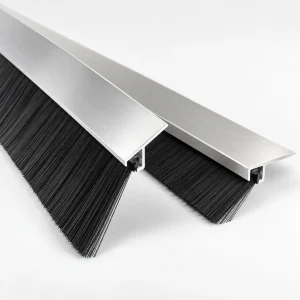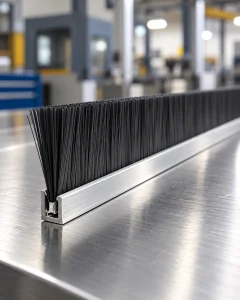

Walk through any modern production floor, and you’ll notice a shift in how equipment is designed. Machines are faster, layouts are tighter, and materials are more varied than ever before. In this evolving environment, rigid components often struggle to keep up. This is where Flexible Strip Brushes quietly make a difference—by adapting instead of resisting.
Rather than forcing surfaces into alignment or applying constant pressure, these brushes respond to movement. They bend, recover, and adjust in real time, which makes them uniquely suited to systems that are rarely static. That flexibility is no longer a “nice to have” feature; it’s becoming essential.
Built for Real-World Movement, Not Perfect Conditions
In theory, machines are aligned once and run smoothly forever. In reality, vibration, temperature changes, and regular wear slowly alter those alignments. Flexible strip brushes are designed with this reality in mind.
Because the bristles move independently, they maintain consistent contact even when surfaces shift slightly. This allows them to perform tasks like sealing gaps, clearing debris, or guiding materials without constant manual adjustment. Over time, this adaptability reduces interruptions and helps systems run more smoothly with less intervention.
More Than Cleaning: The Many Roles They Play
One of the most common misconceptions is that brushes exist only to clean. Flexible strip brushes do much more than sweep dust away. In many applications, they function as soft barriers—controlling airflow, blocking light, reducing noise, or preventing fine particles from escaping enclosed areas.
They’re also widely used where products need guidance without damage. Instead of rigid rails that can scratch or dent surfaces, flexible bristles gently direct items while absorbing minor impacts. This makes them especially valuable when handling finished, coated, or delicate materials.
Gentle Contact, Strong Results
What makes flexible strip brushes effective is not force, but distribution. The bristles spread contact across a wider area, reducing stress on both the brush and the surface it touches. This leads to more uniform performance and slower wear.
From a maintenance perspective, this matters. Components that fail gradually are far easier to manage than those that fail suddenly. Flexible strip brushes typically wear evenly, giving operators time to plan replacements rather than reacting to unexpected breakdowns.
Material Choices Shape Performance
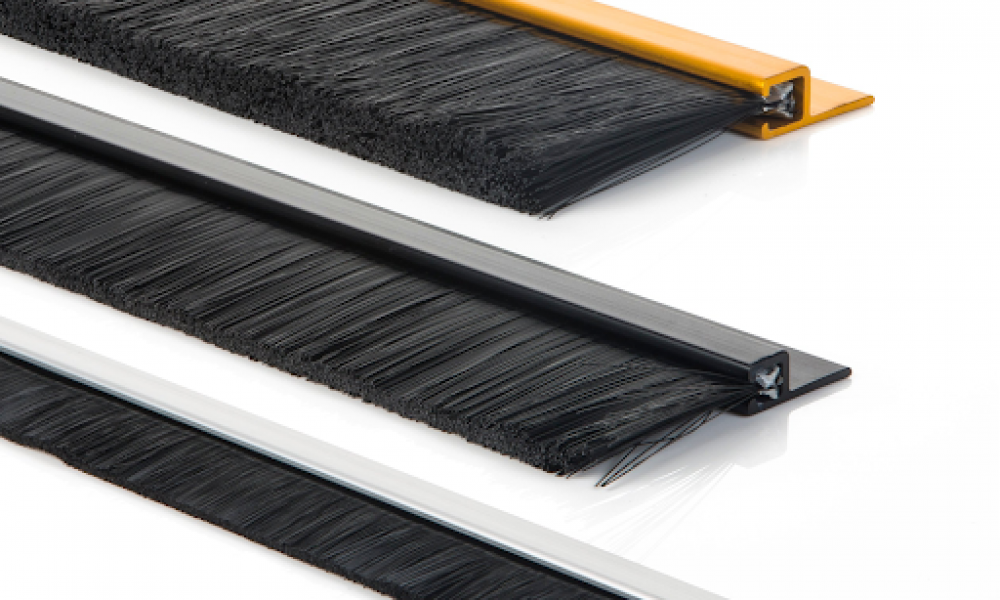
Not all flexible strip brushes behave the same way. Their performance depends heavily on bristle material, density, and backing flexibility. Some materials are chosen for softness and surface protection, while others are selected for durability in abrasive or high-temperature environments.
This level of customization allows brushes to be matched closely to their application. When the right combination is used, the brush feels less like an add-on and more like a natural extension of the equipment itself.
Solving Problems in Tight and Awkward Spaces
As machinery becomes more compact, space limitations create new challenges. Flexible strip brushes excel in narrow gaps, curved edges, and confined channels where rigid solutions simply don’t fit.
They are particularly useful during retrofits, where redesigning equipment may be impractical. Adding a flexible brush can resolve issues like material leakage or surface damage without major structural changes—making them a practical solution for evolving systems.
Why Flexibility Matters Today
Efficiency today is about reducing friction—mechanical, operational, and even maintenance-related. Flexible strip brushes contribute to this by requiring no power, creating minimal resistance, and adjusting automatically to changing conditions.
They may not draw attention, but their impact shows up in smoother operations, longer equipment life, and fewer small issues turning into large problems.
Final Thoughts
Flexible Strip Brushes succeed because they acknowledge an important truth: real-world systems are never perfectly still. By working with movement rather than against it, they offer a reliable, low-maintenance solution for modern industrial challenges.
Sometimes, the smartest design choice isn’t the strongest or most rigid option but the one that knows how to bend.