
Textile machinery operates around loose fibres, lint and fine dust throughout the production process. Without regular and controlled cleaning, this material can collect around rollers, guides, moving parts and working surfaces. Machine cleaning brushes provide a practical way to remove fibre build-up while equipment is operating or during scheduled maintenance. The right brush can help reach areas that are difficult to clean manually, but textile applications need careful brush selection. Filament material, bristle stiffness, brush shape and machine speed all affect how effectively the brush handles lint without disturbing delicate components.
Why Lint And Fibre Build-Up Is A Problem
Lint is light, but that does not make it harmless.
Fine fibres can settle on machine surfaces and gradually form thicker layers. Once accumulated, the material can interfere with moving components, affect sensors and create additional cleaning work for operators.
In textile production, the type and amount of build-up can vary depending on the material being processed and the stage of production. Cotton fibres, synthetic fibres, wool and blended materials do not behave in exactly the same way.
A suitable cleaning brush needs to remove the build-up without creating more loose fibres or damaging the machine.
Where Brushes Can Help In Textile Machinery
Textile equipment contains plenty of narrow spaces and moving surfaces where lint can collect.
Brushes may be used around:
- Rollers and cylinders
- Guides and machine frames
- Conveyor sections
- Fibre handling areas
- Textile processing equipment
- Moving surfaces where loose fibres accumulate
The exact brush design depends on where it is installed and what it needs to clean.
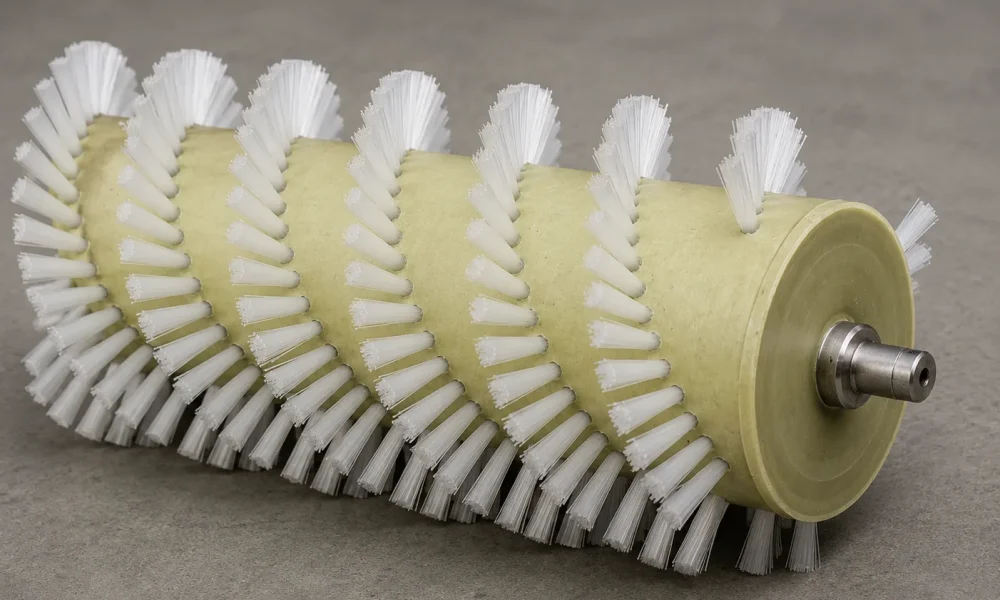
A cylindrical brush roller, for example, can provide continuous brushing across a moving surface. A strip brush may be more appropriate where the requirement is to seal an opening while also helping to control loose material.
Why Brush Selection Matters In Textile Applications
A textile machine is not the place for an unnecessarily aggressive brush.
Fibres and textile surfaces can be sensitive to excessive pressure or sharp filaments. A brush that is too stiff may catch or disturb fibres, while one that is too soft may simply move lint around rather than removing it.
The objective is controlled contact.
The brush needs enough flexibility to collect or move the unwanted material while remaining compatible with the machine surface and production process.
Filament material
Nylon and polypropylene are commonly considered for various industrial cleaning applications because they offer different combinations of flexibility, wear resistance and chemical resistance.
Natural fibres may also be appropriate for particular applications, depending on the required brushing action and operating environment.
The correct material depends on the textile machine, surface and type of fibre being handled.
How Brush Stiffness Affects Lint Removal
Bristle stiffness is easy to overlook.
For loose lint and fine dust, a very stiff brush is not necessarily more effective. The bristles need to make contact with the material without putting unnecessary force on the machine.
A softer filament may be suitable for light deposits, while a firmer configuration can provide more brushing action where fibres have become compacted.
The right stiffness should be based on the cleaning task, not simply on how tough the brush feels.
Brush Shape Should Match The Machine
Textile machinery comes in many configurations, and there is no single brush shape that fits every cleaning requirement.
Cylindrical Brushes
These are useful where continuous rotary brushing is required. They can be designed for applications involving rollers, moving surfaces and production equipment.
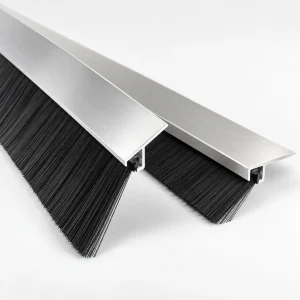
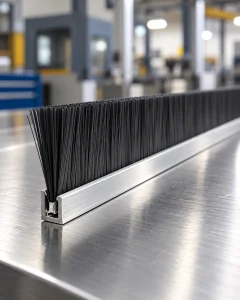
Strip Brushes
Strip brushes are useful where cleaning, wiping or sealing is required along a straight edge or around an opening. They can help prevent dust and fibres from passing through gaps in equipment.
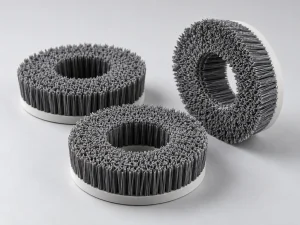
Disc Brushes
Disc-shaped brushes can be used where the machine requires a circular brushing action or cleaning around a particular working area.
The choice should follow the movement and geometry of the machine.
What Textile Engineers Should Check Before Choosing A Brush
Before ordering machine cleaning brushes, gather a few basic details about the application.
- Identify the material being removed.
Is it fine lint, loose fibre, compacted dust or a mixture? - Check the machine surface.
Determine whether the brush will contact metal, plastic, rubber, fabric or another material. - Measure the available space.
Brush diameter, width, length and mounting clearance can all affect installation. - Check operating speed.
A brush used on a continuously moving or rotating machine may need a different configuration from one used during manual cleaning. - Consider temperature and chemicals.
Cleaning agents, heat and moisture can affect filament performance. - Look at the existing brush, if there is one.
Uneven wear or repeated filament breakage can point to a problem with the current specification.
These details give a brush manufacturer something useful to work with rather than relying on a general product description.
A Quick Comparison Of Common Brush Configurations
| Brush type | Typical textile application | Main consideration |
| Cylindrical brush | Continuous cleaning around rollers and moving surfaces | Diameter, rotation and bristle contact |
| Strip brush | Cleaning or sealing along edges and openings | Length, mounting and filament stiffness |
| Disc brush | Circular or localised brushing | Diameter and brushing direction |
| Custom brush | Unusual machinery or restricted spaces | Exact machine dimensions and application |
The best option depends on the equipment. A cylindrical brush may be ideal for one section of a textile line and completely unsuitable for another.
What Happens When The Wrong Brush Is Used?
There are a few common outcomes.
The brush may fail to remove enough lint, leaving operators to clean the same area manually. Or the brush may be too aggressive and disturb fibres or wear against the machine surface.
Rapid bristle wear is another warning sign.
If a brush repeatedly becomes flattened, sheds filaments or wears heavily in one area, check the contact pressure and alignment before simply ordering another one. The brush specification may also need to change.
A good brush should work with the machine, not fight against it.
Can Machine Cleaning Brushes Be Customised For Textile Machinery?
Yes. Customisation can be useful when a standard brush does not fit the available space or does not provide the required cleaning action.
Ganesh Brush Manufacturers supply industrial brushes for different applications and can manufacture customised brush solutions according to specific requirements. Depending on the application, factors such as brush dimensions, filament material, bristle length and density can be considered.
This is particularly useful for textile machinery where the brush needs to fit around existing components or reach a specific section of the equipment.
Keeping Lint Under Control During Production
Brushes are only one part of a textile machinery cleaning routine.
Regular inspection still matters. Maintenance teams should check areas where lint tends to accumulate and look for changes in the brush itself. A brush that is gradually losing its shape may still appear functional but provide less effective cleaning.
A practical maintenance routine can include:
- Inspecting brush condition at scheduled intervals
- Checking for uneven bristle wear
- Removing compacted fibre from the brush
- Checking mounting and alignment
- Reviewing cleaning performance
- Replacing the brush when its working contact has deteriorated
This is particularly important on equipment that runs for long periods without stopping.
Choosing Machine Cleaning Brushes For Textile Equipment
The right brush is determined by more than the fact that the machine needs cleaning. Textile applications require a balance between effective lint removal and gentle contact with the equipment.
Filament material, stiffness, brush shape, dimensions, machine speed and operating conditions all need to work together.
Ganesh Brush Manufacturers works with standard and customised industrial brush requirements for machinery and production applications. Our team can assess the cleaning task and machine setup to help determine a suitable machine cleaning brush, whether the requirement involves a cylindrical roller, strip brush, disc brush or another configuration.
Frequently Asked Questions
1. Why are brushes used for cleaning textile machinery?
Brushes can remove lint, loose fibres and dust from machine surfaces, rollers, guides and other areas where material tends to accumulate.
2. Which bristle material is suitable for textile machinery?
The choice depends on the machine surface and cleaning requirement. Nylon, polypropylene and other filament materials can be considered for different applications.
3. Can brushes remove fine textile lint?
Yes. The brush needs to have suitable filament flexibility, density and contact pressure for the type of lint and surface being cleaned.
4. Are cylindrical brushes suitable for textile machines?
They can be useful for continuous cleaning around rollers and moving surfaces where rotary brushing is required.
5. Can textile machinery brushes be customised?
Yes. Custom brushes can be made to suit specific machine dimensions, mounting arrangements and cleaning requirements.
6. How often should textile machine brushes be replaced?
There is no fixed interval. Replacement should be based on bristle wear, cleaning performance, damage and the operating conditions of the machine.
7. What should I do if the brush is collecting too much lint?
Inspect the brush for compacted fibres, check its stiffness and contact pressure, and confirm that the brush configuration is suitable for the material being removed.