
Industrial roller brushes are often used on conveyor systems to remove dust, product residue, chips and other unwanted material while the line is running. At high conveyor speeds, however, brush selection becomes more demanding. A brush that works well on a slower line may not deliver the same result when rotational speed, contact pressure and production volume increase. Engineers need to consider the conveyor speed, surface being cleaned, material being removed, brush diameter, filament type and operating environment before choosing a brush. Getting these details right helps maintain consistent cleaning without adding unnecessary wear to the belt or brush.
Why Conveyor Speed Changes Brush Requirements
A conveyor running at high speed gives the brush less time to interact with the surface. The brush therefore needs to make effective contact during each pass rather than relying on prolonged brushing.
Rotational speed matters too. A roller brush that spins too quickly can create excessive friction, heat or bristle wear. Too little rotation, on the other hand, may leave residue behind.
The goal is controlled contact. The brush should remove the unwanted material without putting unnecessary load on the conveyor system.
This is why engineers should not select a brush based only on its physical dimensions.
Start With The Material Being Removed
Before selecting the brush, identify exactly what needs to come off the conveyor.
Dust and fine particles require a different brushing action from wet product residue, metal chips or heavier debris. Some materials may also become compacted against the belt, requiring more aggressive bristles.
Consider whether the material is:
- Fine and loose, such as dust or powder
- Sticky or damp, such as food residue
- Sharp or abrasive, such as metal chips
- Heavy enough to require stronger mechanical contact
- Likely to build up during continuous production
The more clearly the contamination is defined, the easier it becomes to select an appropriate filament and brush configuration.
Filament Material Affects Cleaning Performance
The filament is the part of the brush that actually contacts the conveyor, so its properties matter considerably.
Nylon is commonly used for industrial cleaning applications because it offers good flexibility and wear resistance. Polypropylene can be suitable for various general cleaning tasks and environments where chemical resistance is required.
For more aggressive applications, abrasive filaments can provide additional surface action. Metal wire is another option where the application requires a much harder brushing action.
There is no universal “best” filament. The correct choice depends on the conveyor surface, material being removed and required cleaning intensity.
Brush Diameter And Rotational Speed
The diameter of an industrial roller brush affects both its contact area and operating speed.
A larger brush can provide a broader contact surface, but it may also require more space within the machine. Its rotational behaviour will also differ from a smaller roller operating at the same drive speed.
Engineers should therefore consider the brush diameter together with the conveyor speed and available installation space.
The drive system matters as well. If the brush is mechanically driven, its rotational speed needs to be compatible with the equipment. If it is driven by contact with the conveyor, the brush design needs to account for the relative movement between the two surfaces.
How Much Brush Contact Is Needed?
More contact is not always better.
A brush pressed too firmly against a conveyor belt can create unnecessary resistance and accelerate wear. Excessive pressure can also deform the bristles, reducing their ability to move through the material that needs to be removed.
On the other hand, insufficient contact may result in patchy cleaning.
The correct setup usually provides enough bristle penetration to reach the unwanted material while allowing the filaments to flex and recover during operation.
For high-speed systems, this balance becomes even more important because the brush is making repeated contact over long operating periods.
Consider The Conveyor Surface
The belt or surface being cleaned should be treated as part of the brush specification.
A robust brush that works well on a hard metal surface may be unsuitable for a softer conveyor belt. Likewise, an abrasive filament may be useful for removing stubborn material in one application but unnecessarily aggressive in another.
Engineers should check:
- Surface hardness and sensitivity
- Belt texture and profile
- Whether the surface is smooth or uneven
- Whether the conveyor is continuous or segmented
- Cleaning direction
- Required contact pressure
The brush should clean the surface without becoming another source of damage.
Temperature, Moisture And Chemicals Matter
Production environments can expose brushes to conditions that are not obvious from the cleaning task alone.
A conveyor in a food processing plant may operate with water, cleaning agents and organic residue. A manufacturing line may involve oils, lubricants or elevated temperatures. In some applications, the brush may be exposed to chemicals throughout the production cycle.
These factors can affect filament performance and service life.
If the brush is expected to operate in a wet or chemically demanding environment, the filament and brush construction should be selected accordingly. A specification that works in a dry workshop may not perform the same way on a continuously washed production line.
Watch The Wear Pattern
One of the simplest ways to assess whether a roller brush is working correctly is to inspect how it wears.
Uniform wear across the brush usually indicates relatively consistent contact. If one section wears much faster than another, the issue could be alignment, uneven pressure, incorrect positioning or a problem with the conveyor itself.
Excessive bristle deformation can also indicate that the brush is being pressed too hard against the surface.
Replacing the brush without investigating the wear pattern may solve the immediate problem but leave the underlying issue untouched.
When A Custom Industrial Roller Brush Makes Sense
Standard brush sizes are suitable for many conveyor applications. But high-speed production systems often have specific space, mounting and cleaning requirements.
A custom roller brush can be specified around the machine rather than forcing the machine to accommodate a standard product. Dimensions, core construction, filament material, bristle length and density can all be considered according to the application
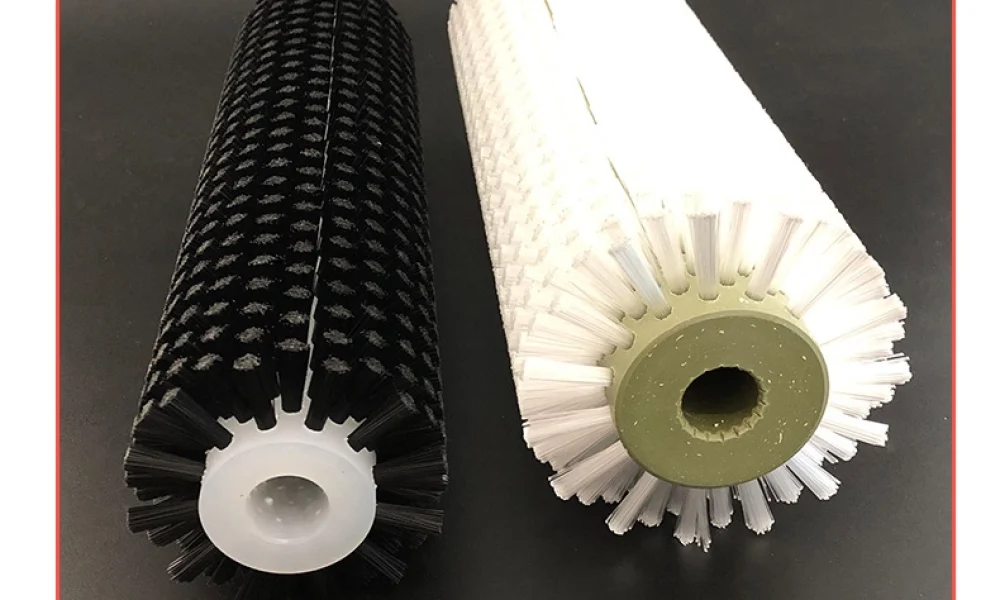
GBM supplies industrial roller brushes and cylindrical brush rollers for applications including machinery cleaning, conveyor cleaning, washing and other industrial processes. Its cylindrical brushes are available in different configurations and can be manufactured according to specific application requirements.
For engineers dealing with an unusual conveyor width, limited installation space, specific mounting arrangement or difficult cleaning material, a customised brush can be a more practical option.
A Practical Checklist For Engineers
Before ordering a roller brush, gather the operating information first.
- Conveyor speed: Know the normal and maximum operating speed.
- Surface: Identify the belt or material being brushed.
- Contamination: Describe what needs to be removed.
- Brush size: Check the available diameter, width and installation clearance.
- Filament: Select a material and stiffness suited to the cleaning task.
- Operating conditions: Account for moisture, chemicals and temperature.
- Contact pressure: Avoid excessive force while maintaining effective cleaning.
- Drive arrangement: Confirm how the brush will rotate and at what speed.
- Maintenance: Consider how easily the brush can be removed, inspected and replaced.
Having these details ready makes brush selection far more precise.
Choosing Industrial Roller Brushes For Continuous Production
A high-speed conveyor places greater demands on every component involved in cleaning. The brush has to keep pace with production while maintaining consistent contact and resisting premature wear.
The right industrial roller brushes are selected according to the complete application, not simply the conveyor dimensions. Filament type, brush diameter, bristle length, density, rotational speed and operating conditions all influence the final result.
At Ganesh Brush Manufacturers, we manufacture cylindrical and other industrial brushes for different production and cleaning requirements. Our team can work with the operating details of a conveyor system to determine a suitable brush configuration, whether a standard design is appropriate or a customized solution is needed.
Frequently Asked Questions
1. What are industrial roller brushes used for?
They are used for continuous brushing applications such as conveyor cleaning, machinery cleaning, washing, surface cleaning and removing unwanted material during production.
2. Which filament is best for conveyor cleaning?
It depends on the conveyor surface and material being removed. Nylon, polypropylene, abrasive filaments and wire are among the options used for different industrial applications.
3. Can roller brushes operate at high conveyor speeds?
Yes. The brush needs to be specified according to conveyor speed, brush diameter, rotational speed, contact pressure and the cleaning requirement.
4. Can an industrial roller brush be customised?
Yes. Roller brushes can be manufactured with different diameters, widths, filament types, bristle lengths and configurations to suit particular machinery.
5. How often should a conveyor roller brush be replaced?
There is no universal replacement interval. Brush condition, cleaning performance and wear pattern are better indicators of when replacement is required.
6. Can roller brushes be used in wet environments?
Yes, provided the brush materials are suitable for moisture, cleaning chemicals and the operating temperature of the application.
7. How can excessive brush wear be reduced?
Check the brush pressure, alignment, rotational speed and filament selection. Excessive contact or an unsuitable filament can shorten brush life.