
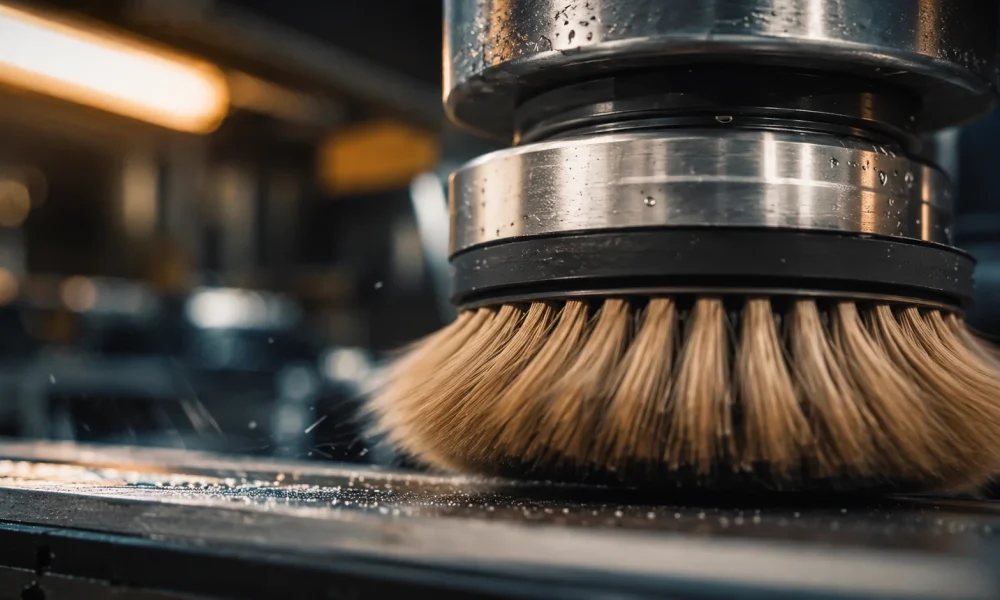
Automated machinery depends on components that fit the process properly, and industrial brushes are no exception. A standard brush may work perfectly well for a straightforward cleaning or sweeping task, but it can become a poor fit when equipment has unusual dimensions, limited clearance or a specific cleaning requirement. This is where custom brush manufacturers can offer a more suitable approach. Custom brushes can be made around the machine, rather than forcing an existing brush to fit the application. The right choice comes down to the machine’s requirements, operating conditions, cleaning task and how consistently the brush needs to perform.
Standard Industrial Brushes: When Are They Enough?
Standard brushes are not a compromise by default.
They are widely used because many industrial applications have fairly predictable requirements. If the brush size, filament and mounting arrangement already match the machinery, there may be little reason to customize it.
A standard brush can make sense when:
- The machine has sufficient space for commonly available brush sizes
- The cleaning or sweeping task is relatively straightforward
- A suitable filament type is already available
- The required brush dimensions fall within standard specifications
- Replacement availability is more important than a highly specific configuration
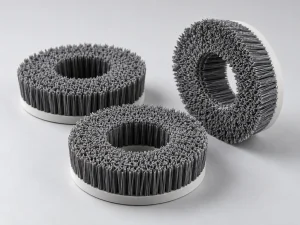
For a conveyor cleaning application, for example, a standard cylindrical brush may provide exactly the required contact and coverage. There is no benefit in customising a component simply for the sake of having a custom product.
When Standard Brushes Start Creating Problems
The situation changes when the brush technically fits but does not perform consistently.
Perhaps the bristles do not reach a particular section of the machine. Maybe the brush needs to operate around a shaft, frame or other component. In another case, the available brush creates too much pressure on the surface because its bristle length or density is unsuitable.
These problems are often small at first. Then they become maintenance issues.
Common signs that a standard brush may not be suitable include:
- Uneven cleaning
Some areas are cleaned properly while residue remains elsewhere. - Rapid bristle wear
The brush wears much faster than expected, particularly in one section. - Surface damage
The bristles are too aggressive for the material being cleaned. - Poor machine clearance
The brush has to be positioned awkwardly because the available space is limited. - Frequent adjustments
Operators repeatedly change brush position or pressure to get acceptable results.
If any of these sound familiar, the issue may not be the machine. The brush itself may need to be reconsidered.
Custom Brushes Are Built Around The Application
The biggest difference between a standard and custom brush is simple: the custom version starts with the machine’s requirements.
Instead of asking, “Which available brush can fit here?”, the process becomes, “What brush will perform this task correctly?”
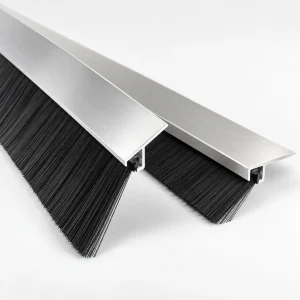
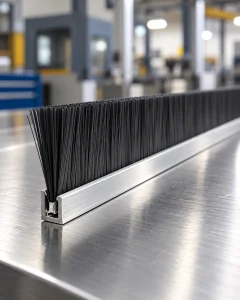
That can involve changes to the brush diameter, width, filament, bristle length, density, core or mounting arrangement.
What Can Be Customized?
| Brush element | Why it matters |
| Brush diameter | Determines contact area, clearance and rotational behaviour |
| Brush width | Allows the brush to cover the required working area |
| Filament material | Affects flexibility, wear resistance and cleaning action |
| Bristle length | Controls contact and reach |
| Bristle density | Influences brushing intensity and coverage |
| Core construction | Determines how the brush is mounted and driven |
| Mounting arrangement | Allows the brush to work with the existing machine setup |
Not every application needs changes to all of these. Sometimes a small adjustment to filament stiffness or bristle length is enough to improve the result.
Why Automation Makes Brush Selection More Demanding
A person cleaning a machine can react to what is happening. They can apply more pressure in one area, change direction or spend extra time on stubborn residue.
Automated machinery does none of that.
The brush follows its programmed movement repeatedly, often for long operating periods. If the specification is wrong, the same problem can be repeated hundreds or thousands of times.
This makes consistency particularly important.
For automated applications, engineers should look at:
- Machine speed
- Brush rotation
- Contact pressure
- Surface material
- Type of residue or debris
- Operating temperature
- Moisture and chemical exposure
- Available installation space
- Expected operating hours
A custom brush becomes worthwhile when these conditions cannot be addressed effectively with an existing standard configuration.
Custom Does Not Automatically Mean Better
This distinction matters.
A custom brush is not inherently superior simply because it is custom-made. If a standard brush already meets the machine’s requirements, it may be the more sensible option.
The decision should be based on performance.
| Situation | More suitable option |
| Common size and straightforward cleaning task | Standard brush |
| Unusual machine dimensions | Custom brush |
| Limited installation clearance | Custom brush |
| Existing standard brush performs consistently | Standard brush |
| Uneven cleaning with available brushes | Custom brush |
| Special filament or stiffness requirement | Custom brush |
| Easy replacement is the main priority | Standard brush |
| Brush must integrate with a specific machine design | Custom brush |
This is also why a good brush manufacturer should ask questions before recommending a product. The application comes first.
What Engineers Should Check Before Choosing
Before deciding between a standard and custom industrial brush, collect the basic operating information.
1. Identify The Cleaning Problem
What exactly is the brush expected to remove?
Dust, loose particles, oil, metal chips and product residue all behave differently. A brush that handles fine dust may not have enough mechanical action for heavier debris.
2. Check The Surface
Is the brush contacting steel, plastic, rubber, glass, fabric or another material?
The surface determines how aggressive the brush can be.
3. Measure The Available Space
This sounds obvious, but it is often where problems begin.
Measure the maximum brush diameter, available width, shaft arrangement and clearance around the installation area. A few millimetres can matter when the brush sits inside automated equipment.
4. Review The Existing Brush
If a brush is already in use, inspect it before replacing it.
Look for uneven wear, flattened bristles, damaged filaments and areas where residue remains. The wear pattern can reveal whether the problem lies with the brush specification, pressure or alignment.
5. Consider The Operating Environment
A brush working in a dry warehouse faces very different conditions from one used around water, cleaning chemicals, heat or abrasive materials.
The filament and construction need to cope with those conditions.
The Real Cost Is Not Always The Brush Price
A cheaper standard brush may look attractive when comparing quotations. But the purchase price is only one part of the calculation.
If the brush needs frequent replacement, requires manual adjustment or leaves residue that causes additional cleaning, the apparent saving can disappear quickly.
For automated machinery, it is more useful to consider the total operating effect:
Brush cost + replacement frequency + maintenance time + production disruption
A brush that costs slightly more but lasts longer and performs consistently may be the better choice for the production line.
Where Custom Industrial Brushes Are Particularly Useful
Custom brushes are often worth considering when the machinery itself has been designed for a specific process.
This can include:
- Automated conveyor systems
- Machinery with restricted internal clearance
- Specialised cleaning equipment
- Food processing machinery
- Glass and surface cleaning systems
- Metal processing equipment
- Deburring machinery
- Textile production equipment
- Woodworking machinery
- Automated sweeping systems
Ganesh Brush Manufacturers produces standard and customised industrial brushes for a range of applications, including machinery cleaning, conveyor cleaning, surface treatment, food processing and other industrial processes.
The company works with different filament materials, brush forms and configurations to suit specific requirements rather than treating every application as the same.
How Custom Brush Manufacturers Approach A Requirement
A useful conversation with custom brush manufacturers should go beyond asking for a price.
A manufacturer should first understand how the brush will actually be used.
A typical process may involve:
- Understanding the application
The cleaning task, machine and operating conditions are discussed. - Reviewing specifications
Dimensions, filament type, bristle length, density and mounting requirements are considered. - Matching the brush to the machine
The proposed configuration is checked against available space and operating conditions. - Manufacturing the brush
The selected design is produced according to the agreed specifications. - Reviewing performance
If necessary, the design can be adjusted based on how it performs in the actual application.
That last step is particularly useful for specialised machinery. A brush that looks right on paper still has to work properly once installed.
So, Which One Should You Choose?
There is no need to make the decision more complicated than it is.
Choose a standard industrial brush when an existing configuration meets the machine’s requirements and performs reliably.
Consider a custom industrial brush when the application has unusual dimensions, specific cleaning demands, difficult operating conditions or recurring performance problems.
For automated machinery, the most sensible option is the one that delivers consistent contact, suitable cleaning action and reasonable service life without creating new maintenance problems.
At Ganesh Brush Manufacturers, we work with both standard and customised industrial brush requirements. Our team can assess the machine, cleaning task and operating conditions and help determine whether an existing brush is suitable or whether a custom configuration makes more sense.
Frequently Asked Questions
1. Are custom industrial brushes more expensive than standard brushes?
They can cost more initially because they are manufactured to specific requirements. However, the overall value depends on service life, cleaning performance and maintenance requirements.
2. When should I choose a custom brush?
A custom brush is worth considering when standard options do not provide the required dimensions, cleaning action, filament type or machine compatibility.
3. Can the bristle material be customised?
Yes. Depending on the application, brushes can be made using materials such as nylon, polypropylene, abrasive filaments, natural fibres or wire.
4. Can a brush be made to fit an existing machine?
Yes. Custom brush dimensions and mounting arrangements can be developed around the available machine space and installation requirements.
5. Are standard industrial brushes suitable for automated machinery?
Yes, provided the brush matches the machine’s operating conditions, dimensions, cleaning task and required performance.
6. How can I tell if my current brush is poorly matched?
Uneven wear, inconsistent cleaning, frequent replacement, surface damage or repeated adjustments can all indicate that the brush specification needs to be reviewed.
7. What information should I provide to a brush manufacturer?
Provide the machine dimensions, cleaning application, surface material, debris or residue being removed, operating speed, environment and details of the existing brush if one is already installed.