
Ask any brush engineer which bristle material they reach for first on a strip brush application, and the answer is almost always nylon. Not because it’s cheap. Not because it’s convenient. Because for most industrial sealing, guiding, and cleaning applications, it simply performs better across more conditions than any other material on the shortlist.
The nylon brush strip didn’t become an industry default by accident. It earned that position.
What Strip Brushes Actually Do?
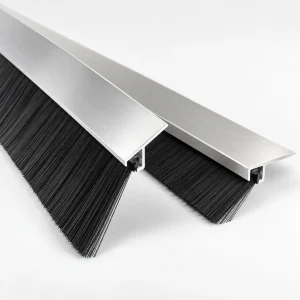
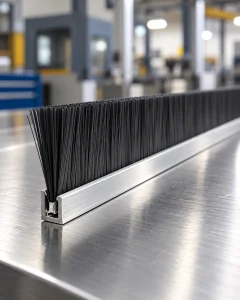
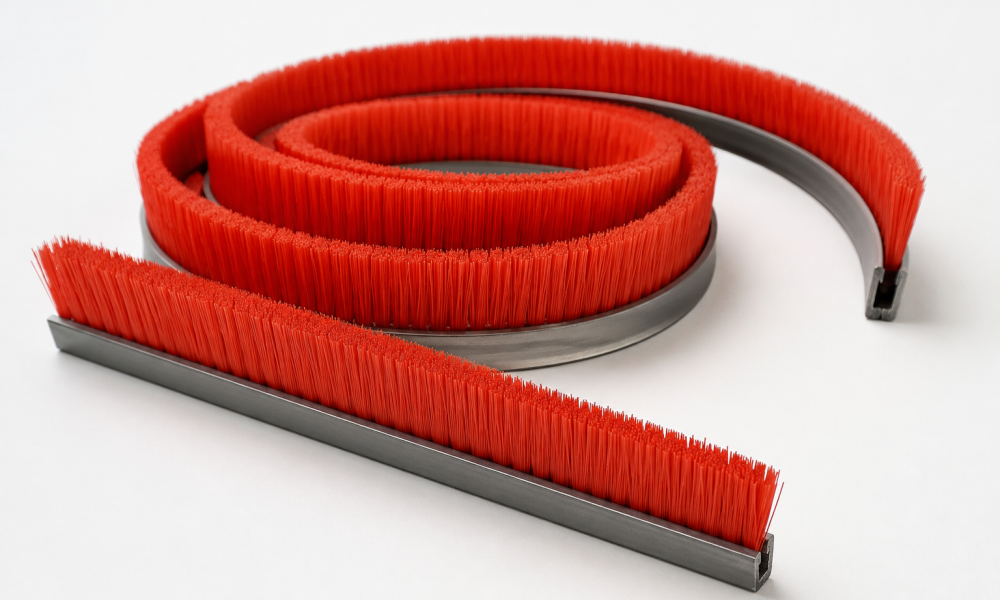
Before getting into material, it helps to be clear about the job. Strip brushes are linear brushes – bristles set into a metal channel – used for sealing gaps, guiding materials, controlling airflow, excluding dust and debris, and edge finishing across moving surfaces.
They run in door seals, conveyor side guides, escalator skirt panels, CNC machine enclosures, window frames, grain elevators, and dozens of other applications where you need a flexible, continuous barrier between two surfaces or environments.
The bristle material determines how well the brush holds up. And in that contest, nylon wins most of the rounds.
Reason 1: It Flexes Without Breaking
Strip brushes make contact with moving surfaces, edges, and materials constantly. A bristle material that doesn’t recover from deflection fails quickly – it takes a bent shape and stays there.
Nylon has an excellent memory. Bend a nylon bristle, release it, and it returns to its original position. This elastic recovery is what keeps a nylon brush strip performing consistently over thousands of operating cycles without the bristles flattening out or deforming permanently.
Steel wire, by comparison, work-hardens over repeated flex cycles. It’s the right choice for heavy deburring or aggressive surface finishing – but for sealing and guiding applications where the brush is deflecting continuously at low force, nylon outlasts it significantly.
Reason 2: It Handles Moisture Without Degrading
Industrial environments aren’t dry. Wash-down zones, food processing lines, outdoor conveyor systems, and glass washing machines all introduce water into the brush contact zone regularly.
Steel wire rusts. Natural fibre – horsehair, tampico, coir – absorbs water, swells, changes stiffness, and eventually rots. Nylon absorbs almost no moisture. It maintains its diameter, its stiffness, and its recovery properties whether the brush is running wet or dry.
For any application where the nylon brush strip sees intermittent or continuous water exposure, this is the material decision that saves replacement cost over time.
Reason 3: Chemical Resistance Across Most Industrial Environments
Cleaning agents, lubricants, mild acids, and processing chemicals are present in most manufacturing and processing facilities. The brush material needs to survive contact without degrading, swelling, or leaching contamination into the process.
Nylon holds up against:
- Most alkalis and mild acids
- Industrial cleaning detergents and degreasers
- Oils and lubricants common in metalworking and conveyor applications
- Moderate solvent exposure in some nylon grades
Natural bristles and some synthetic alternatives fail in these environments fairly quickly. Nylon doesn’t dissolve, doesn’t stiffen, and doesn’t shed fibres into the process stream at the rate cheaper materials do.
Reason 4: Consistent Stiffness Can Be Tuned To The Application
This is an underappreciated advantage. Nylon isn’t one thing – it comes in a range of filament diameters, and diameter controls stiffness directly.
Fine filaments (0.10mm to 0.20mm) produce a soft brush suited for light sealing, dust exclusion, and gentle surface contact. Heavier filaments (0.30mm to 0.50mm and above) produce stiffer brushes for more demanding guiding and edge contact applications. The same material, different specification, different performance profile.
This tunability means a single material – nylon – covers a wide range of strip brush applications without switching to a different bristle type. Fewer material variants in your maintenance inventory. Simpler procurement. Predictable performance across applications.
Reason 5: Long Service Life In Continuous Operation
Strip brushes in industrial settings often run continuously – escalators don’t stop, conveyor side guides don’t get breaks, CNC enclosure seals run with every cycle. The bristle material needs to tolerate this without visible degradation over months of operation.
Nylon’s combination of abrasion resistance, flex recovery, and chemical stability produces a service life that most alternative materials don’t match in continuous-duty applications. A correctly specified nylon brush strip on a door seal or conveyor guide typically outlasts steel wire in the same application by a considerable margin – because the failure mode of steel in low-force flex applications (work hardening and fatigue) hits faster than nylon’s wear curve.
The Case For Getting The Specification Right
Nylon being the preferred material doesn’t mean all nylon strip brushes perform equally. Filament diameter, bristle length, channel material, and fill density all affect how the brush performs on your specific application.
A brush that’s under-filled loses its sealing effectiveness too quickly. One with bristles that are too long for the gap it’s sealing bends at the base rather than the tip – and that’s where fatigue damage starts.
Ganesh Brush Manufacturers has been making strip and sealing brushes since 2008, including nylon variants configured for specific gap widths, machine speeds, and environmental conditions. If your current strip brush specification isn’t holding up, the problem is usually in the spec, not the material.
Frequently Asked Questions
1. Why is a nylon brush strip widely used in industrial applications?
A nylon brush strip is valued for its flexibility, durability, and ability to maintain its shape during continuous use. It performs well in sealing, guiding, cleaning, and dust control applications, making it one of the most versatile choices across a wide range of industries.
2. Is a nylon brush strip suitable for wet or humid environments?
Yes. Nylon absorbs very little moisture, allowing it to retain its strength and flexibility even in damp or wash-down environments. This makes it a dependable option for applications where brushes are regularly exposed to water or high humidity.
3. Can a nylon brush strip resist chemicals?
Nylon offers good resistance to many industrial oils, greases, detergents, and mild chemicals. However, the exact level of chemical resistance depends on the nylon grade and the specific operating conditions, so it’s always advisable to confirm material compatibility before use.
4. How do I choose the right nylon brush strip for my application?
Consider factors such as bristle diameter, filament length, brush density, channel size, operating environment, and the type of surface the brush will contact. Providing these details to the manufacturer helps ensure the brush is designed for optimal performance.
5. How long does a nylon brush strip typically last?
The service life depends on factors such as operating speed, contact pressure, environmental conditions, and maintenance practices. When correctly specified for the application, a quality nylon brush strip can provide reliable performance over extended periods of continuous industrial use.