
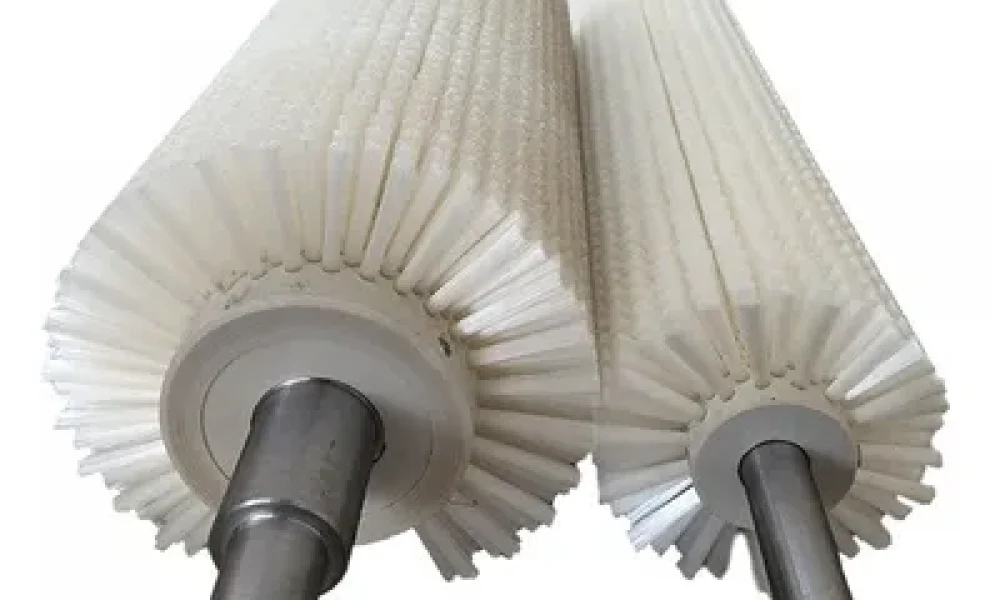
There is a machine running in your facility right now that nobody talks about until it stops working. The conveyor brush roller. It spins, scrubs, and keeps your line moving, until one day it does not. And when it fails, it rarely gives you a warning. If your conveyor belt cleaning brushes are wearing out faster than the manufacturer’s estimated life, the problem is almost never the brush itself. It is what is happening around it.
The Wear Is Telling You Something
Most operations teams look at a worn-out brush and think: “time to reorder.” That is the wrong read.
Brush wear is data. It tells you about misalignment, load imbalance, wrong bristle material, improper contact pressure, all the things that quietly eat through your brush before its time.
Here is what rapid wear actually looks like in practice:
- Uneven bristle erosion across the roller length (one side bald, the other still full)
- Excessive heat near the shaft or bearing housing
- Bristle tips splitting or fraying rather than wearing flat
- Roller vibrating during operation, even mildly
- Brush losing grip on debris within the first two to three weeks of installation
If any of these sounds familiar, the brush is not the problem. The setup is.
The Real Reasons Your Brush Roller Dies Early
Wrong bristle material for the application
This is the most common reason. Every conveyor line has its own conditions, wet, dry, abrasive, oily, food-grade, metal-heavy. A nylon bristle designed for light surface cleaning will disintegrate if you run it against coarse aggregate or hot particulate.
Steel wire, polypropylene, nylon, abrasive-filled filaments, each is matched to specific use conditions. Using the wrong one cuts expected life by 40 to 60 per cent easily.
Incorrect contact pressure
Too little pressure means the brush just grazes the belt without doing any real work. Too much and you are creating friction heat and compressing the bristle tips, they bend, splay, and wear from the side rather than the tip. Both scenarios reduce effectiveness and life.
The right contact depth for most industrial applications sits between 6 to 10mm of bristle-to-surface engagement. Exceeding this by even a few millimetres accelerates wear significantly.
Misalignment of the roller axis
A brush roller that is even slightly off-axis will load one end of the bristle cluster more than the other. It looks fine from a distance. But run it for three weeks and you will see asymmetric wear that no amount of reordering will fix, because you are just buying the same problem again.
Laser alignment checks on brush rollers are underused in most facilities. They should be routine.
Running speed mismatched to belt speed
The differential between brush rotation speed and belt travel speed matters. If the brush is spinning too fast relative to belt movement, you get excessive abrasion on both surfaces. If it spins too slow, it is not cleaning efficiently and the belt residue is grinding against stationary bristles.
The ratio is not the same for every application. Quarrying operations need different parameters than glass washing lines or food conveyor systems.
Poor mounting and shaft support
A roller that flexes under load transfers that flex directly into bristle stress. Long brush rollers with inadequate mid-span support will bow during operation. You will see this as a wear pattern that is worse in the centre of the brush than at the ends.
This is a structural problem. Fixing the brush will not fix it.
What Actually Extends Brush Life
Getting more life from your conveyor belt cleaning brushes is not about buying “better quality” brushes in isolation. It is about matching the brush specification to the actual operating conditions, and then setting it up correctly.
A few things that make a measurable difference:
- Specify bristle material based on what is actually on the belt. Not what was on the original spec sheet from 2017. Lines change. Materials change. The brush spec should change with them.
- Set contact pressure properly during installation, not by feel, but with a measurable gauge or a controlled test run. Document it.
- Check alignment at installation and again after the first 72 hours of operation. Initial settling under load often causes micro-shifts that compound over weeks.
- Inspect wear pattern every two weeks for the first three months with a new brush. The wear pattern is diagnostic. A trained eye can catch alignment and pressure issues before they become replacement costs.
- Match rotational speed to belt speed deliberately. This is engineering, not guesswork.
When To Replace Versus When To Re-Evaluate
Not every worn brush needs replacing right away. Brushes with even wear patterns across the full face, and still adequate bristle length for contact, can be turned or reversed on their shafts in some configurations to extend use.
But brushes with:
- Core deformation
- Broken or missing bristle clusters
- Shaft play beyond 0.2mm
- Surface scoring on the roller body itself
Need immediate replacement. Running these is not saving money. It is risking belt damage and downstream contamination.
The calculation is simple: a worn conveyor belt cleaning brushes unit that scratches your belt costs ten times more than the brush itself.
One More Thing Facilities Managers Miss
Brush rollers on cleaning systems are often treated as consumables with a fixed reorder cycle, every 90 days, every six months, whatever was decided once and never revisited. That cycle was probably right at some point.
But production volumes change. Material types change. Shift patterns change. The brush does not know any of this. It just wears.
Revisit your brush specification at least once a year. If your line conditions have shifted, and most do, gradually, your brush spec should shift with them.
Getting The Specification Right From The Start
The fastest way to stop burning through brush rollers is to stop buying generic and start specifying correctly. That means fibre type, bristle diameter, fill density, core material, shaft configuration, and contact parameters, all matched to your actual line conditions, not an approximate category.
At Ganesh Brush Manufacturers, we have been manufacturing industrial brushes since 2008 across applications in metal finishing, glass, textiles, and conveyor systems. If your conveyor belt cleaning brushes are wearing out before they should, speak to our team. We can help you identify whether it is a specification issue, a setup issue, or both.
FAQs
1. Why do conveyor cleaning brush rollers wear out faster than expected?
Conveyor cleaning brush rollers often wear out prematurely due to incorrect bristle materials, excessive contact pressure, roller misalignment, improper speed settings, or inadequate shaft support. Identifying the root cause can help extend brush life and improve cleaning performance.
2. How can I tell if my conveyor brush roller is misaligned?
Common signs of misalignment include uneven bristle wear across the roller, excessive vibration during operation, reduced cleaning efficiency, and one side of the brush wearing out faster than the other. Regular alignment checks can prevent premature failure.
3. Does the type of bristle material affect brush lifespan?
Yes. Different applications require different bristle materials. Nylon, polypropylene, steel wire, and abrasive-filled filaments are designed for specific operating conditions. Using the wrong material can significantly reduce brush life and cleaning effectiveness.
4. How often should conveyor brush rollers be inspected?
Newly installed brush rollers should be inspected every two weeks during the first few months of operation. Regular inspections help identify wear patterns, alignment issues, and pressure problems before they lead to costly replacements or belt damage.
5. When should a conveyor cleaning brush roller be replaced?
A brush roller should be replaced if it shows core deformation, broken bristle clusters, excessive shaft play, or surface damage to the roller body. Continuing to use a damaged brush can increase maintenance costs and potentially damage the conveyor belt.