
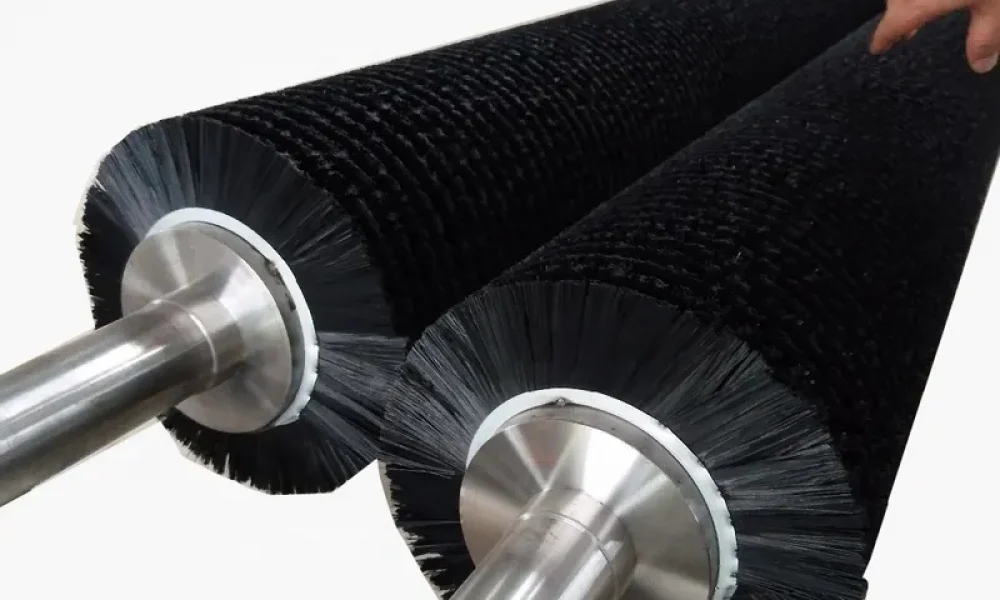
India added over 24 GW of solar capacity in 2024 alone. Rajasthan, Gujarat, Andhra Pradesh, utility-scale parks now cover land that was scrubland a decade ago. And somewhere inside every one of those installations, there is a cleaning problem that does not get enough attention in procurement conversations. Cylindrical brush rollers are at the centre of it. Whether the sector is specifying them correctly is another matter entirely.
Dust Is Not The Only Enemy
Everyone in the solar sector understands soiling loss. A dirty panel produces less power. Clean it, and output recovers. That part is straightforward.
What is less discussed is what the cleaning process itself does to the panel over time.
Automated cleaning systems, robotic or machine-mounted, run brushes across panel surfaces repeatedly. Daily, in high-dust environments. The brush that works without scratching on day one may behave very differently on day 300, when bristle tips have worn, filament ends have frayed, and contact pressure has shifted because nobody recalibrated the system.
Panel glass is tempered but not indestructible. Micro-abrasions from a poorly specified or worn-out brush accumulate. They scatter light. They reduce transmission. The panel degrades not from the sun or the weather, but from its own cleaning system.
This is a specification and maintenance problem. Not a technology problem.
What The Indian Environment Actually Demands
Solar installations across India do not operate in one kind of climate. A plant in Jaisalmer faces a fundamentally different environment from one in coastal Tamil Nadu or the semi-arid zones of Karnataka.
The brush specification has to account for this.
- Dust particle type matters. Fine silica dust in Rajasthan behaves differently from coastal salt deposits or pollen-heavy fouling in agricultural zones. Coarser particles require a bristle that can displace without dragging.
- Water availability shapes the system. Dry cleaning systems, increasingly common in water-scarce desert installations, put more mechanical demand on the brush. The bristle has to do what water-assisted cleaning would otherwise handle.
- Temperature range affects filament behaviour. A brush roller operating in a desert environment where surface temperatures exceed 60 degrees Celsius needs filament material that does not soften or deform under sustained heat.
- Mounting and machine compatibility is non-negotiable. A cylindrical brush rollers specification that does not account for the cleaning machine’s rotational speed, contact force, and traverse rate is a specification done incompletely.
None of this is exotic engineering. It is basic application matching, which, surprisingly, does not happen consistently in the solar cleaning supply chain.
Where Specifications Go Wrong In Practice
The typical procurement sequence for solar cleaning brushes in India still runs: identify the machine, find a brush that fits the shaft dimensions, order on price. Filament type, bristle density, core material, and end-cap design get treated as secondary variables.
They are not secondary. They determine whether the brush cleans effectively at month one and at month eighteen.
Here is what a proper specification process looks at:
- Filament material, polypropylene for general dry cleaning, softer nylon variants for panels with anti-reflective coatings, abrasive-filled filaments only where surface conditions specifically call for it
- Bristle trim length and taper, shorter, denser fills for dry cleaning systems; longer, softer fills for wet-assist systems
- Core material, aluminium cores for corrosion resistance in coastal environments; steel where structural rigidity under higher contact force is needed
- End-cap and shaft interface, these fail before the bristles in most cases of premature brush wear, and they are consistently underspecified
- Rotational speed compatibility, the brush must be matched to the RPM range of the cleaning system, not just the shaft diameter
Getting these right at procurement saves far more than the cost difference between a generic brush and a correctly specified one.
The 2026 Context: Why This Matters More Now
India’s solar sector is scaling faster than its maintenance infrastructure. New parks come online every quarter. O&M contracts are being written for 25-year asset lives. The decisions made now about cleaning brush specifications will play out across decades of panel performance.
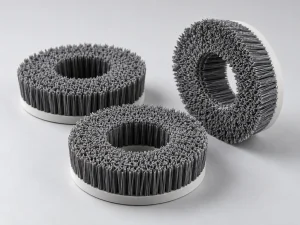
Cylindrical brush rollers that are correctly specified from the start, matched to environment, panel type, and cleaning system, extend panel life, reduce cleaning system wear, and lower O&M costs over the asset lifecycle. Those that are not will create replacement cycles and panel damage that show up slowly in performance data and quickly in maintenance budgets.
The sector is mature enough now to treat brush specification as an engineering decision, not a procurement afterthought.
Conclusion
Indian solar developers and O&M contractors increasingly need brush manufacturers who understand application conditions, not just catalogue dimensions.
Ganesh Brush Manufacturers has been producing industrial cylindrical brush rollers since 2008, with in-house manufacturing capability and experience across renewable energy, glass, and textile applications. If your cleaning system needs properly specified brush rollers for Indian site conditions, our team is available to work through the specification with you.
FAQs
1. Why are cylindrical brush rollers important for solar panel cleaning systems?
Cylindrical brush rollers help remove dust, dirt, pollen, and other contaminants from solar panels, allowing them to operate at optimal efficiency. When properly specified, they clean effectively without causing damage to panel surfaces or coatings.
2. Can the wrong brush roller damage solar panels?
Yes. Incorrect brush specifications, worn bristles, excessive contact pressure, or unsuitable filament materials can cause micro-abrasions on panel surfaces over time. This may reduce light transmission and impact long-term energy generation performance.
3. What factors should be considered when selecting a solar panel cleaning brush roller?
Key considerations include the local environment, dust type, cleaning method (wet or dry), operating temperatures, filament material, bristle density, core construction, and compatibility with the cleaning machine’s speed and mounting system.
4. Are different brush roller specifications needed for different regions of India?
Absolutely. Solar installations in desert regions, coastal areas, and agricultural zones face different contamination challenges. Brush rollers should be selected based on local conditions such as dust composition, moisture exposure, temperature ranges, and cleaning requirements.
5. How often should solar panel cleaning brush rollers be inspected or replaced?
Regular inspections should be carried out to check for bristle wear, deformation, mounting issues, and changes in cleaning performance. Replacement intervals vary depending on operating conditions, but proactive maintenance helps prevent panel damage and ensures consistent cleaning efficiency.