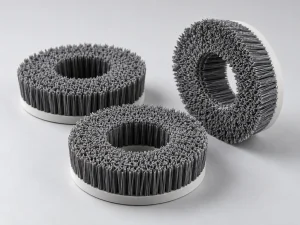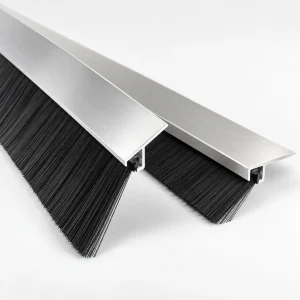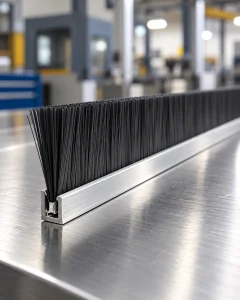

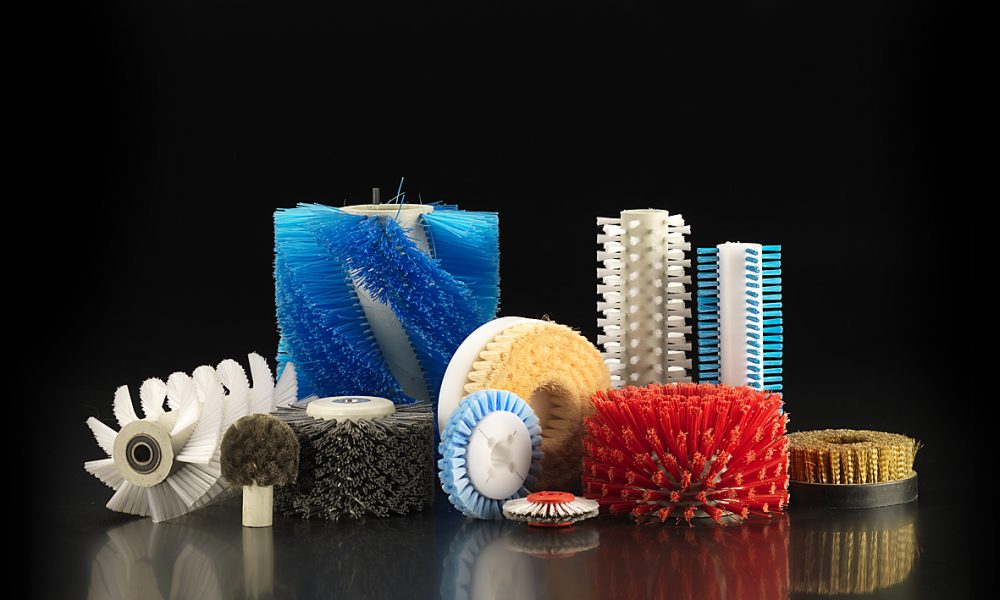
Industrial brush manufacturers in India are now competing for export contracts that would have automatically gone to suppliers in Germany, Italy, or China five years ago. The important question is no longer whether Indian manufacturers can compete globally. The real question is how they are winning export business, and where the limitations still remain.
The cost advantage is part of the story, but it is no longer the deciding factor on its own.
Indian manufacturers do benefit from lower sourcing costs for materials such as nylon, polypropylene, and steel wire, especially when factories are located close to domestic raw material suppliers. But export buyers in 2026 are far more cautious than they were a decade ago. Procurement teams in Germany, the UK, and the Middle East have already experienced the problems that come with low-cost suppliers who fail on consistency, communication, or delivery timelines.
A procurement manager at a food processing facility in Europe is not searching for the cheapest industrial brush manufacturer in India. That buyer is looking for reliability across the full supply cycle.
That includes:
- Consistent bristle density across large production batches
- Material certifications that hold up during audits
- Lead times that remain stable after the order is confirmed
- Technical communication that does not require repeated clarification
- Predictable quality across every shipment
The Indian manufacturers winning export contracts today are the ones who understand that reliability itself has become the product. The brush is simply the physical item being shipped.
What Changed Over The Last Three Years
Several shifts in the global manufacturing ecosystem created new opportunities for industrial brush manufacturers in India.
The first was rising manufacturing costs in China. The increase was not dramatic, but it was enough to change procurement calculations for industrial consumables. Across many product categories, the pricing gap between Chinese and Indian manufacturers widened enough for international buyers to reconsider sourcing strategies.
The second shift was supply chain diversification.
After Covid-related disruptions, shipping delays, and global logistics instability, many buyers stopped depending entirely on a single sourcing country. India emerged as a practical second-source manufacturing hub for industrial products, including technical and application-specific brushes.
The third shift involved factory modernisation inside India itself.
Not every manufacturer invested, but the export-focused companies upgraded significantly in areas such as CNC trimming, automated tufting, and precision winding systems. That matters because export markets operate on consistency. A CNC-controlled winding setup can maintain dimensional tolerances across large production runs in ways manual production cannot reliably achieve.
The manufacturers gaining export traction are usually the ones that treated automation as a process-control investment rather than a marketing upgrade.
Where The Gaps Still Exist
Industrial brush manufacturers in India have improved substantially, but there are still clear weaknesses in global export markets.
One of the most visible gaps is packaging and presentation.
A European or Middle Eastern buyer receiving poorly packed products with inconsistent labelling or handwritten documentation immediately questions the discipline behind the manufacturing process itself. In industrial exports, first impressions are physical. Buyers judge the carton quality, pallet condition, product labelling, and packaging consistency before the brush is even installed.
Documentation is another area where many manufacturers still struggle.
Export buyers increasingly expect:
- Material test certificates with traceability
- Compliance documentation for food-grade or pharmaceutical applications
- Proper dimensional datasheets with defined tolerances
- Accurate HS code classification
- Complete export paperwork prepared the first time correctly
Many manufacturers still treat documentation as an administrative task handled after production. In export markets, documentation is part of the product experience itself.
Digital presence is another weakness that continues to affect perception.
A large number of industrial brush manufacturers in India still rely heavily on IndiaMart listings and outdated websites with limited technical information. Buyers in markets such as Dubai, Manchester, or Rotterdam expect detailed catalogues, technical specifications, downloadable datasheets, and clear application information online before initiating supplier discussions.
If the website appears outdated, buyers often assume the factory systems are outdated as well.
The Middle East May Be The Most Practical Growth Market
Most discussions around exports focus heavily on Europe, but the Middle East represents a major opportunity for industrial brush manufacturers in India.
The advantages are practical:
- Shorter shipping timelines
- Existing trade relationships
- Strong demand from food processing, construction, oil and gas, and manufacturing sectors
- Lower entry barriers compared to parts of Europe
Markets such as the UAE, Saudi Arabia, and Qatar consume industrial brushes across a wide range of applications, including conveyor cleaning, surface finishing, sealing, and processing equipment maintenance.
Relationship-building is also faster.
A buyer in Dubai or Sharjah is generally more accessible through exhibitions and direct meetings than a procurement team operating within highly established European supplier networks. That shorter relationship cycle gives Indian manufacturers a stronger opening to establish trust and repeat business.
What Will Separate The Manufacturers That Scale Globally
The next phase of growth for industrial brush manufacturers in India will depend less on pricing and more on operational discipline.
Global buyers are no longer evaluating industrial brush manufacturers in India only on cost. They are evaluating whether the manufacturer can operate with the same process discipline, communication standards, and production consistency expected from established international suppliers. In export markets, trust is built slowly through repeatable execution. A shipment that arrives on time with stable quality, proper documentation, and predictable performance often matters more than a slightly lower quotation.
That shift is creating a new category of Indian manufacturers focused not just on production capacity, but on long-term export credibility. At Ganesh Brush Manufacturers, the emphasis remains on combining application-focused brush engineering with consistent manufacturing practices, technical responsiveness, and dependable supply support for industrial customers across domestic and international markets. As global sourcing expectations continue evolving, manufacturers that prioritise reliability over short-term transactional selling are the ones most likely to build lasting export relationships.
FAQs
- Why are industrial brush manufacturers in India gaining export demand in 2026?
Indian manufacturers are gaining demand because they offer competitive pricing, improved manufacturing quality, better supply chain reliability, and growing interest from global buyers looking beyond China.
- Is low cost the main reason Indian industrial brush manufacturers are winning export contracts?
No. Cost helps, but export buyers also look for consistent quality, proper documentation, reliable lead times, technical accuracy, and clear communication.
- What are the main challenges Indian industrial brush manufacturers face in global markets?
The main challenges include weak packaging, incomplete documentation, limited digital presence, a lack of detailed technical datasheets, and inconsistent export-ready presentation.
- Why is the Middle East an important export market for Indian brush manufacturers?
The Middle East offers shorter shipping routes, strong trade relationships with India, and growing demand from construction, oil and gas, and food processing industries.
- What can help Indian industrial brush manufacturers scale globally?
Manufacturers can scale by improving process discipline, building dedicated export teams, maintaining certifications, responding faster to buyers, and treating documentation as part of the product.