
Picking the wrong Strip brush manufacturer is a slow leak. You will not notice it on day one. You will notice it in month four, when the brushes are showing early wear, the delivery on your repeat order is delayed by two weeks, and your maintenance team is quietly working around the problem instead of reporting it.
This is the conversation most procurement teams avoid until something breaks.
If your plant depends on strip brushes for sealing, dust control, conveyor guidance, or surface finishing, who makes them matters as much as what they are made from. Here is what to actually look for.
Why Manufacturer Quality Shows Up Later, Not Sooner
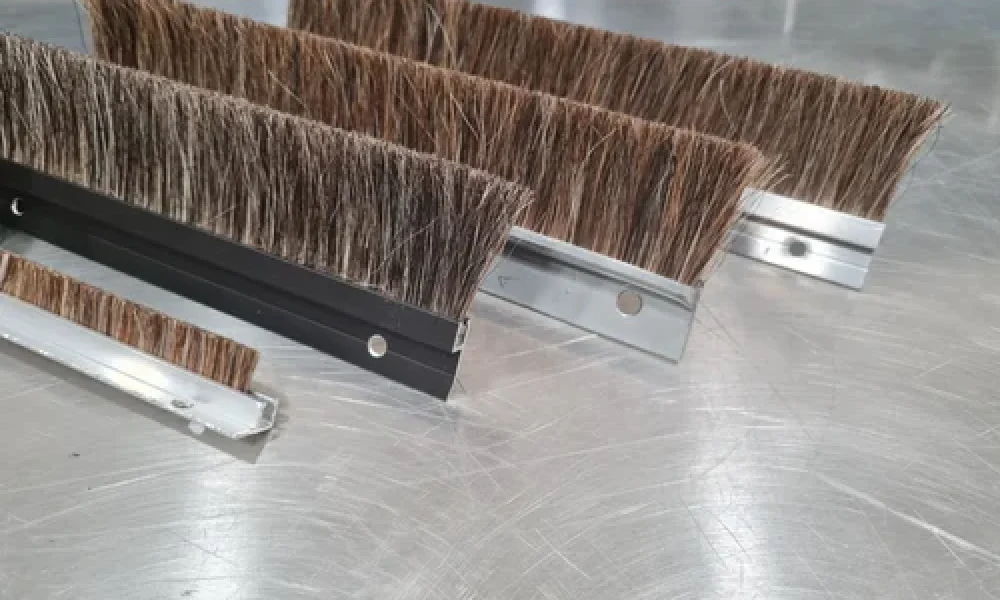
A Strip brush looks simple. Filaments held in a metal channel, crimped or stapled in place. You can get them from a local distributor, a catalogue supplier, or a specialist manufacturer. They all look roughly the same in a photograph.
The difference shows up after six months of continuous use. Or when your application changes slightly and you need a modified configuration. Or when something goes wrong mid-production and you need a replacement fast.
That is when manufacturer quality becomes visible. Not at the point of purchase.
The qualities worth evaluating are not always the ones on the product page. Most of them have to do with how the manufacturer operates, not just what they produce.
1. Range of Filament Expertise
A manufacturer who only works with one or two filament types will fit every problem to those materials, whether or not they are the right fit.
Filaments for strip brushes cover a wide range:
- Nylon (standard and abrasive grades)
- Polypropylene
- Natural fibres like Tampico and horsehair
- Metal wire (steel, brass, stainless steel)
- Heat-resistant and anti-static speciality filaments
Each material behaves differently under temperature, moisture, chemical exposure, and mechanical stress. A manufacturer with real depth across these materials can recommend the right one for your application. A manufacturer with limited range will often recommend what they know best, not what you need.
When evaluating a strip brush manufacturer, ask them directly: what filament types do you regularly produce in ? A short list is useful information.
2. Customisation Capability Without Long Timelines
Most industrial applications in India do not run on standard brush dimensions. Older machinery, imported equipment, modified production lines — they all create non-standard requirements. A brush that is 2mm too wide or has the wrong channel profile simply will not work.
A capable manufacturer handles customisation as a routine part of operations, not as a special favour that takes three weeks and costs 40% more.
What to look for here:
- Can they adjust channel height, width, and base material on request?
- Do they offer varying trim lengths without minimum order constraints that make small runs impractical?
- Is there a technical person you can speak with about the application, or do all enquiries go through a sales rep reading from a catalogue?
The last point matters more than it sounds. Brush selection involves variables that a non-technical person cannot assess over a phone call. Manufacturers who have application engineers or technically trained staff available for consultation produce better outcomes for their customers.
3. Consistency Across Batches
This is the quality that separates a reliable manufacturer from an unreliable one, and it is almost impossible to evaluate from a single order.
Batch consistency means the fifth order you place performs the same as the first. Same filament density. Same trim uniformity. Same channel grip. In industrial applications, inconsistency in brush performance creates inconsistency in the output your brush helps produce.
Ask any manufacturer you are considering: how do you control filament density and trim length across production runs? No clear answer to that question is itself an answer.
Also worth asking: what is their rejection and quality check process? A small amount of internal rework is normal in manufacturing. A manufacturer who admits this and explains how they manage it is more trustworthy than one who claims zero defects on every run.
4. Material Sourcing Transparency
The filament material in a strip brush determines its lifespan and performance. But filament quality varies significantly within the same material category. There is a difference between good nylon and cheap nylon, between quality polypropylene and the kind that goes brittle after two months in a humid environment.
A good Strip brush manufacturer should be able to tell you, in plain terms, where their filaments come from and what grade they use. This is not about being difficult. It is about understanding what you are buying.
Manufacturers who are transparent about material sourcing usually have a reason to be. They have invested in quality inputs. Manufacturers who give vague answers about “high-quality materials” without specifics are often using whatever is cheapest at the time.
This matters especially for food processing, pharmaceutical environments, or high-temperature exposure, where material traceability has compliance implications.
5. Delivery Reliability, Not Just Lead Time Promises
Every manufacturer quotes a lead time. The useful number is whether they actually meet it.
In Indian industrial procurement, delivery delays are common enough that many buyers build extra buffer time into their purchase cycles. That buffer is dead inventory cost sitting on a shelf. If a manufacturer consistently delivers on schedule, you do not need the buffer.
How to assess this before you have placed ten orders:
- Ask for references from existing customers in similar industries
- Ask specifically about repeat order lead times, not first-order lead times (manufacturers often prioritise first orders to win the account)
- Place a small trial order with a tight timeline and see what happens
Reliability is not something a brochure can prove. You have to test it.
6. After-Sales Technical Support
Strip brushes fail for different reasons. Sometimes it is the wrong material for the application. Sometimes it is an installation issue. Sometimes the brush itself is fine but the mounting channel is worn and causing uneven contact pressure.
A manufacturer who helps you diagnose performance issues after the sale is worth more than one who considers the transaction finished at delivery.
This kind of support tends to come from manufacturers who have been in the business long enough to have seen a wide range of application problems. They recognise what premature wear patterns indicate. They know which filament types are prone to specific failure modes.
When speaking with a prospective manufacturer, notice whether they ask questions about your application or just take the order. The ones who ask questions are usually the ones with the knowledge to back it up.
7. Scale That Matches Your Requirements
This works in both directions.
If your volumes are small (say, 10 to 50 brushes per order), a very large manufacturer may treat you as low priority. Lead times stretch. Technical access gets harder. Customisation requests get pushed back.
If your volumes are large and growing, a very small manufacturer may struggle to keep up during peak periods without affecting consistency.
The right Strip brush manufacturer for your volumes is one whose production capacity and customer profile reasonably match your order pattern. A mid-sized manufacturer with deep application experience is often the best option for most Indian industrial buyers. Enough capacity to handle growth, enough flexibility to handle variation.
Getting the Evaluation Right
Choosing a brush supplier can feel like a minor procurement decision. In practice it is not. Strip brushes are part of production processes in ways their size does not suggest. Dust control gaps, sealing failures, surface inconsistencies, conveyor jams, a number of these trace back to brush performance, directly or partly.
The qualities above are worth building into a simple evaluation checklist before you commit to any manufacturer for the long term. Run three or four candidates through the same set of questions. The differences become obvious quickly.
About Ganesh Brush Manufacturers
Ganesh Brush Manufacturers is a Pune-based industrial brush company with over three decades of manufacturing experience. They work across a range of brush types and filament materials, including strip brush configurations for sealing, cleaning, and surface treatment applications. Both standard and custom solutions are available for industrial buyers across India.
Frequently Asked Questions
1. Why is choosing the right strip brush manufacturer important?
The manufacturer affects product quality, durability, and consistency over time. Poor manufacturing can lead to early wear and operational inefficiencies.
2. What materials should a good strip brush manufacturer offer?
A reliable manufacturer should provide a wide range of filaments like nylon, polypropylene, metal wire, and specialty materials. This ensures the right fit for different industrial applications.
3. How important is customization in strip brush manufacturing?
Customization is crucial as most industrial setups require non-standard sizes and configurations. A capable manufacturer should offer flexible options without long delays.
4. What role does consistency play in strip brush performance?
Consistent quality across batches ensures stable performance in production processes. Variations can lead to inconsistent output and increased maintenance issues.
5. What should you check before selecting a strip brush manufacturer?
Evaluate material sourcing, delivery reliability, technical support, and production capacity. These factors determine long-term performance and supplier reliability.