
In high-speed printing environments, even minor ink splatter or airborne dust can lead to print defects, machine downtime, and increased maintenance costs. Whether in offset, flexographic, gravure, or digital printing setups, controlling ink spread and minimizing dust contamination are critical for maintaining print quality and operational efficiency. This is where Metal Strip Brushes play a highly specialized and performance-driven role.
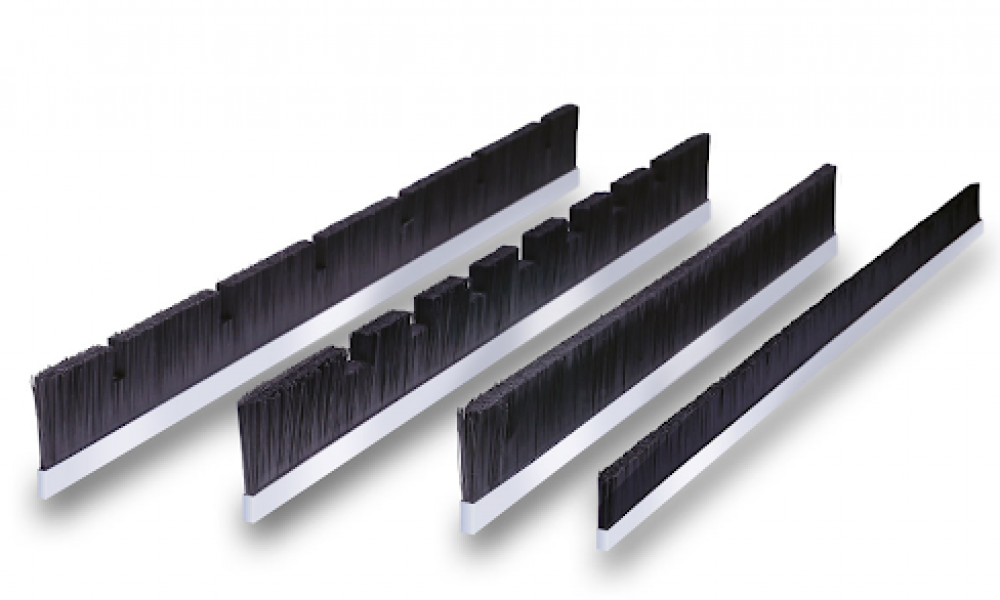
Unlike general sealing components, Metal Strip Brushes are engineered to function under continuous motion, tight tolerances, and exposure to ink, solvents, paper fibers, and static particles. Their structural design makes them ideal for both ink containment and dust control in demanding printing applications.
Why Ink Containment Is Critical in Printing Operations
Ink misting and splashing are common challenges in high-speed printing presses. When rollers rotate at high RPMs, ink can disperse beyond the intended contact area. This can result in:
- Contaminated machine components
- Uneven ink distribution
- Increased cleaning frequency
- Print defects and color inconsistency
- Premature wear of mechanical parts
Metal Strip Brushes are installed strategically along roller edges, ink trays, and plate cylinders to act as flexible containment barriers. Their dense filament structure allows them to form a close-contact seal without interfering with moving parts.
The key advantage is controlled flexibility. The metal channel backing provides structural rigidity, while the filament fill adapts to surface movement. This combination ensures ink remains within the designated zone while maintaining consistent press performance.
Dust Control: A Hidden Threat to Print Quality
Dust in printing facilities typically originates from:
- Paper fibers
- Cardboard particles
- Environmental contaminants
- Static-charged debris
When dust settles on printing plates or substrates, it creates visible imperfections such as spots, streaks, and adhesion failures. In packaging and labeling lines, dust can also interfere with sensor accuracy and finishing processes.
Metal Strip Brushes function as active dust barriers by:
- Sealing machine gaps
- Preventing airborne particles from entering sensitive areas
- Sweeping surfaces before substrate contact
- Controlling airflow leakage around press enclosures
Because they can be customized for length, density, and filament type, they adapt well to different printing machine configurations.
Application Areas in Printing Machines
Metal Strip Brushes are commonly used in:
- Roller Edge Sealing
Installed along ink rollers to prevent lateral ink escape. - Ink Tray Sealing
Minimizes ink leakage and splashing during high-speed runs. - Substrate Cleaning Stations
Removes dust from paper, plastic films, or foil before printing. - Enclosure Gap Sealing
Reduces dust entry into sensitive mechanical assemblies. - Drying & Curing Sections
Helps control airflow and debris during UV or heat curing.
Each application requires precise engineering to ensure the brush neither damages the substrate nor disrupts ink flow.
Material Considerations for Printing Applications
Selecting the correct configuration is crucial. In printing environments, Metal Strip Brushes typically use:
- Stainless steel backing for corrosion resistance
- Nylon or polypropylene filaments for flexibility and chemical resistance
- Anti-static filaments where electrostatic buildup is a concern
For solvent-based ink systems, filament material must resist swelling or degradation. For food packaging printing, hygienic and non-reactive materials are essential.
Customization based on machine speed, ink type, and environmental conditions ensures long service life and consistent performance.
Benefits in High-Speed Printing Lines
When properly designed and installed, Metal Strip Brushes provide measurable operational advantages:
- Reduced ink wastage
- Lower cleaning frequency
- Improved print consistency
- Enhanced machine longevity
- Controlled contamination levels
- Reduced downtime
In large-scale printing units operating 24/7, even minor containment improvements translate into significant cost savings over time.
Installation & Design Considerations
Precision matters. Improper installation can reduce effectiveness or increase wear. Important factors include:
- Correct filament length to maintain optimal contact pressure
- Proper mounting channel alignment
- Adequate density for effective sealing
- Allowance for thermal expansion in high-temperature sections
In custom printing machinery, brushes are often manufactured as per drawing to ensure perfect integration.
Maintenance & Longevity
Metal Strip Brushes used in printing environments must withstand continuous friction and exposure to chemicals. Regular inspection helps identify:
- Filament bending or breakage
- Ink buildup
- Wear due to misalignment
Periodic cleaning and correct tension adjustment can significantly extend operational life.
Strategic Role in Modern Printing Facilities
As printing technology advances toward faster speeds and tighter tolerances, passive containment solutions are no longer sufficient. Metal Strip Brushes serve as engineered control components rather than simple accessories.
Their ability to manage ink dispersion and control dust directly impacts:
- Print accuracy
- Product quality
- Operational stability
- Production efficiency
For printing manufacturers and plant managers aiming to reduce waste and maintain high-quality output, properly configured Metal Strip Brushes are an essential part of the system design.